
Cultivating curiosity, critical thinking, and creative confidence
Program Catalog
Hands-on STEM workshops, ready to drop into your curriculum at any grade.
makerlabkids.com
Serving Metro Atlanta
Use the filters below to customize before printing or saving as PDF - your selections are preserved in the output.
Hands-on STEM workshops, ready to drop into your curriculum at any grade.
This guidebook contains a listing of the programs that we offer and how they can be adapted to meet grade level and academic needs. This is not a comprehensive list - we are more than happy to adapt to your specific school, classroom, and academic needs.
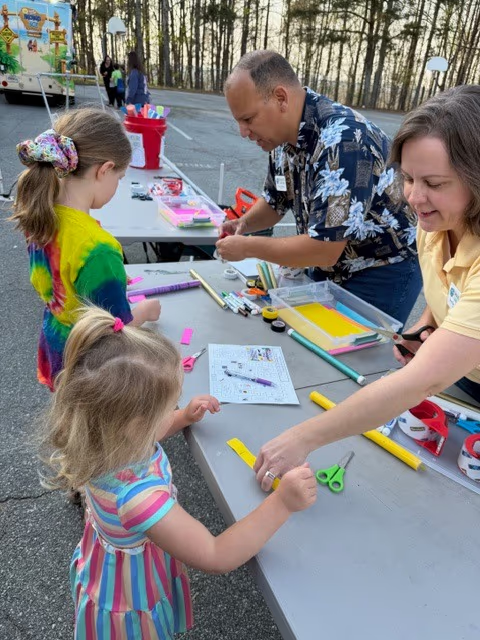
A real photo from the field - Not stock imagery. Every picture is from a workshop we've actually run.
Logistics - What students take home, what space we need, any safety notes.
Grade-level lessons - This maps the specific adaptation of the program to our understanding of the Georgia educational standards.
QR code & URL - Scan or click to view additional information online.
Pricing, service area, and booking are all on makerlabkids.com/pricing. Multi-session discounts available, free travel within 30 miles of Atlanta, reasonable charges beyond that.
Educator resources - We're actively adding printable data collection sheets, lesson plans, standards alignment, etc. under the "Instructor Resources" side panel on each program's page.
We work with teachers to align what we teach to their specific classroom - a program can be reshaped around a particular unit, standard, or group of students. We love building new programs from scratch. Reach out and tell us what you're thinking - brainstorming sessions are FREE!
You can customize this catalog by selecting only the options you want to see. If no selections are made in a group, nothing in that group filters anything out (same as selecting everything in it). Multiple selections within a group are OR'd together - e.g. programs for Middle OR High School. Selections across different groups are AND'd - e.g. only programs for both Electronics AND Math. Your filter choices save to the URL, so you can bookmark or share your customized catalog.
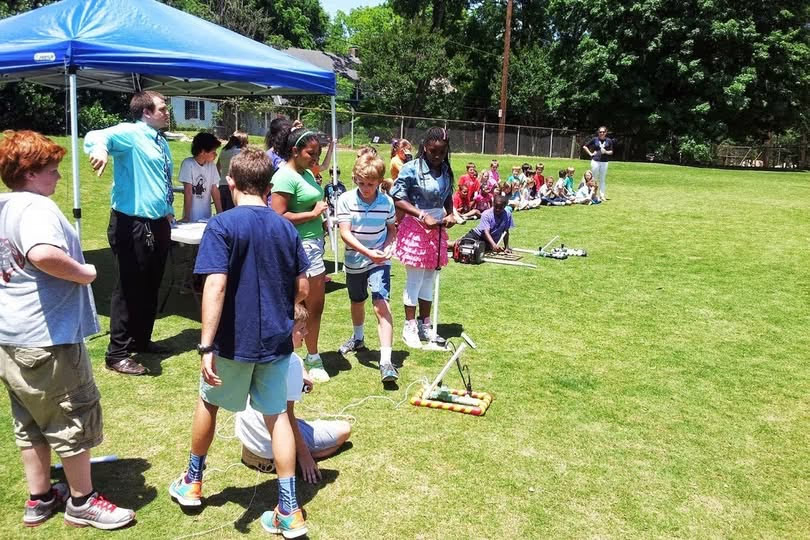
A paper rocket built in five minutes and pressurized with a bike pump flies hundreds of feet in the air, and every kid goes wild. That same rocket carries nearly every math and science lesson we teach: counting pumps in kindergarten, calculating launch angles in middle school, integrating velocity curves in AP Physics C. The iteration loop is measured in minutes: watch the flight, tweak the design, launch again, and record the data (pressure, height, distance, time). Nothing burns, nothing explodes, nothing needs a permit - just compressed air that works on any field or parking lot. Same rockets, every age, every grade - and every kid falls in love with learning!
| Level | Topic | Lesson |
|---|---|---|
| Pre-K | Intro to STEM | Pump and Launch Pump up the rocket and watch it fly! A few pumps goes a little way; a lot of pumps goes way farther. Take turns launching and chasing. |
| Kindergarten | Physical Attributes & Motion (pushes/pulls) | The Push Investigation Test 3, 6, and 10 pumps. Walk heel-to-toe to each landing spot and count steps together. "More pumps = more push = farther!" SKP2 |
| Kindergarten | Addition/Subtraction & Geometry | Rocket Bocce Launch closest to the target cone. Compare "closer" and "farther." Count steps to each rocket to find the winner. K.OA |
| 1st Grade | Measurement, Time, & Geometry | Distance Station Measure flight distance with a tape measure. Record in feet and inches. Compare results on a class chart. 1.MD |
| 2nd Grade | Forces; Matter & Physical Changes | Fin Design Testing Build rockets with different fins (big, small, none). Predict which flies farthest. Test and compare - does the shape change the flight? S2P2 |
| 2nd Grade | Measurement, Money, & Shapes | Measurement Stations Students rotate through stations measuring distance (tape measure), time (stopwatch), and altitude (angle tracker). Record in inches and feet. 2.MD |
| 4th Grade | Multi-digit Multiplication/Division | Launch Data Math Record pump count and flight distance for each student. Calculate average distance and compare across classes. 4.NBT |
| 4th Grade | Geometry | Angle Optimization Set the launcher to different angles (15, 30, 45, 60, 75). Measure distance for each. How does the angle affect distance? What angle maximizes distance? 4.MD 4.G |
| 4th Grade | Light, Sound, & Motion | Forces of Flight Investigate the three forces acting on a rocket: thrust (air pressure pushing up), gravity (pulling down), and drag (air resistance). Add mass to the nose cone and examine how balanced vs. unbalanced forces change the flight. S4P3 |
| 5th Grade | Decimals & Order of Operations | Launch Data Analysis Record altitude, distance, and time as decimals. Calculate averages across multiple launches. 5.NBT |
| 5th Grade | Volume | Rocket Body Volume Calculate the volume of the cylindrical rocket body and cone nose. How does volume relate to weight and flight performance? 5.MD |
| 6th Grade | Ratios | Pressure Ratios Double the pressure: does distance double? Test ratios of pressure to distance. Calculate unit rates (feet per PSI). 6.RP |
| 6th Grade | Expressions/Stats | Stats of a Launch Day Collect 30+ launches from the class using different launchers. Calculate mean, median, and range of distance. Build a box plot. Which launcher had the widest spread? The most consistent? 6.SP |
| 7th Grade | Numbers/Equations | Solve for the Missing Variable Launch rockets as a group. Measure the distance it traveled and the time it was in the air. Solve d = v x t for velocity. Which rocket had the highest velocity? Which rocket had the highest average velocity? 7.EE |
| 8th Grade | Equations | Graphing Launch Data Plot angle vs. distance on a coordinate plane. Identify the function. Is it linear? 8.EE 8.F |
| 8th Grade | Functions/Geometry | Linear Functions of Pressure Graph distance vs. PSI. Is it a linear function? Find the rate of change and y-intercept. Predict distance at a new PSI, then test your prediction. 8.F |
| 8th Grade | Force/Energy | Newton's Laws in Action Launch the same rocket at different pressures: 20, 40, 60, 80 PSI. Measure distance each time. With mass held constant, how does doubling the launch force change the distance? Plot pressure vs. range and compare to F=ma. S8P3 |
| Algebra | Linear functions, equations/inequalities, and rate of change | Rate of Change Plot pressure vs. distance. Calculate slope as rate of change. Where does the relationship break down? A.CED F.LE |
| Algebra | Quadratic & Exponential functions, modeling, and data analysis | Quadratic Trajectories Model flight path as a parabola. Use height-vs-time data to fit a quadratic. Predict landing distance from the equation. F.IF F.BF |
| Geometry | Right triangle trigonometry, circles, volume, and surface area | Altitude Tracking with Trig Measure the angle from ground to the rocket at its apex from known distance away from the rocket. Use trigonometry to calculate real altitudes from their launches. G.SRT |
| Advanced Algebra | Radical functions, logarithmic modeling, and statistical reasoning | Radical Functions for Time of Flight Time aloft = sqrt(2h/g). Graph this radical function. Solve for h given t. Verify with real altitude data. F.BF |
| Pre-Calculus | Trigonometry, polar coordinates, vectors, and parametric equations | Vector Decomposition Decompose launch velocity into horizontal and vertical components. Use vectors to predict landing point with wind correction. Pre-Calc |
| Calculus AB / BC | Limits, continuity, differentiation; BC adds parametric/polar/vectors | Differentiation of Motion Take video of a launch. Frame-by-frame position gives position s(t). Differentiate to get velocity v(t), then acceleration a(t). Verify gravitational acceleration near apex. AP Calc |
| Calculus AB / BC | Limits, continuity, differentiation; BC adds parametric/polar/vectors | Parametric Flight (BC) Flight as parametric equations x(t), y(t). Find dy/dx along the trajectory. Where is dy/dx = 0? Derive arc length integral. AP Calc BC |
| AP Statistics | Data exploration, sampling, experiments, and probability | Statistical Launch Analysis Collect class launch data. Create scatter plots of angle vs. distance. Find the line of best fit. Identify outliers and explain them. S.ID |
| AP Statistics | Random variables, binomial/normal distributions, and statistical inference | Confidence Intervals for Distance Launch 30 identical rockets. Compute mean distance and build a 95% confidence interval. Does the interval change with sample size? Test your hypothesis. S.IC |
| Physics | Kinematics (motion), Newton's Laws, gravity, and energy | Projectile Motion Lab Full kinematics lab: measure launch velocity, decompose into vector components, predict range and max height, verify with real data. SP1 SP2 |
| AP Physics 1 | Kinematics, Dynamics, Circular motion, and Gravitation | Complementary Angles Challenge Find two angles (15+ degrees apart) that land at the same distance. Prove complementary angles yield equal range using kinematic equations. AP 1 Units 1-3 |
| AP Physics C | (Calculus-based) Mechanics, Kinematics, and Force | Calculus-Based Flight Analysis Derive the trajectory equation from F=ma. Account for drag as a velocity-dependent force. Compare ideal vs. real flight data. AP C Mech |
| AP Physics C | (Calculus-based) Mechanics, Kinematics, and Force | Volumetric Flow Rate Wire an Arduino relay to the launch valve and time how long it takes to bleed the pressure chamber dry. Model dP/dt as pressure-dependent flow, integrate to recover P(t), and solve for the volumetric flow rate Q(t). Does the calculus match the Arduino's timer? AP C Mech |
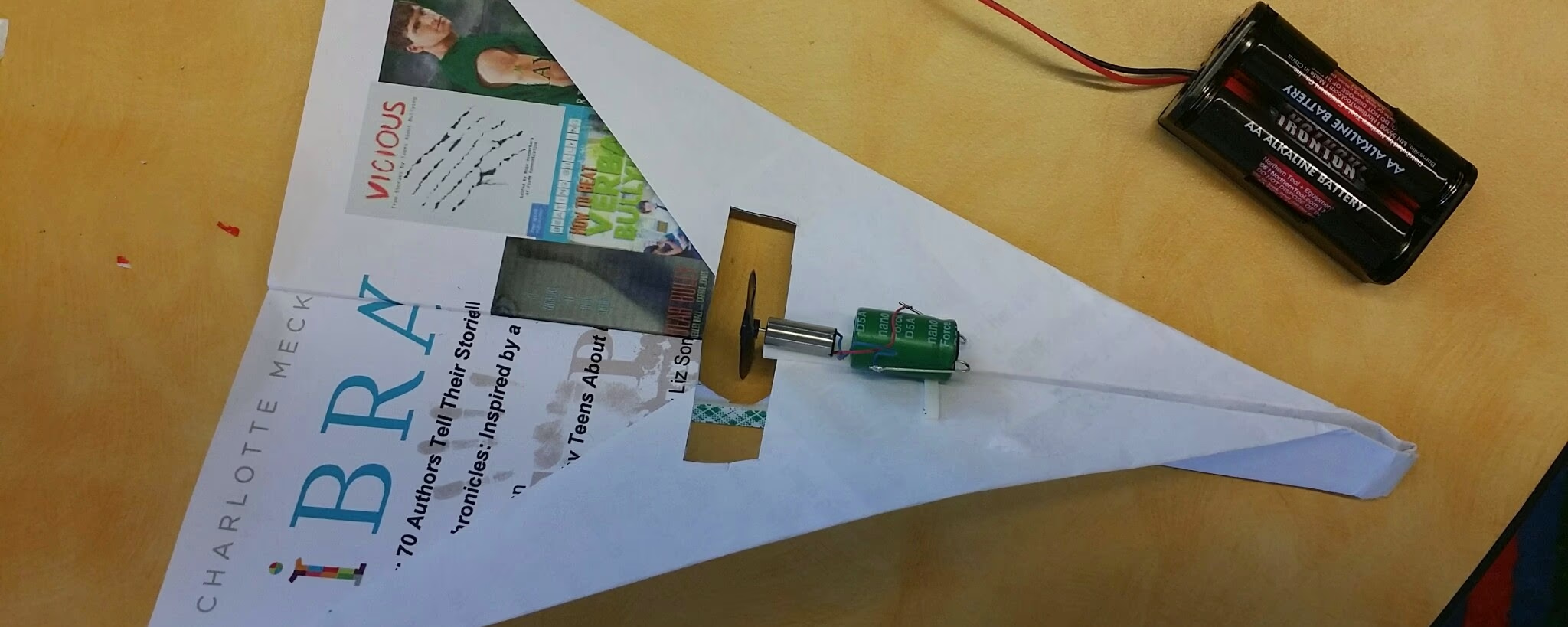
Add an electric motor to your paper airplane, charge the capacitor, and watch it fly! Learn about aerodynamics, thrust, and flight.
| Level | Topic | Lesson |
|---|---|---|
| 4th Grade | Geometry | Angle of Attack Bend the ailerons and rudder to different angles. Measure each angle with a protractor. Which angles make the plane climb, dive, turn, or fly level? 4.G |
| 8th Grade | Force/Energy | Four Forces with Thrust Identify lift, drag, thrust, and weight on a powered plane. Bend the ailerons and rudder to redirect the forces in flight - how does changing the control surfaces shift balanced to unbalanced forces and change the flight path? S8P3 |
| Physics | Kinematics (motion), Newton's Laws, gravity, and energy | Control Surfaces and Flight Draw the free-body diagram for a paper plane in steady flight. Now bend the ailerons and rudder to measured angles, launch, and measure how far the plane lands off a straight-line target. Does the deflection distance grow linearly with the angle, or faster, or slower? Try each control surface alone and together - which one bends the flight path more? SP2 |
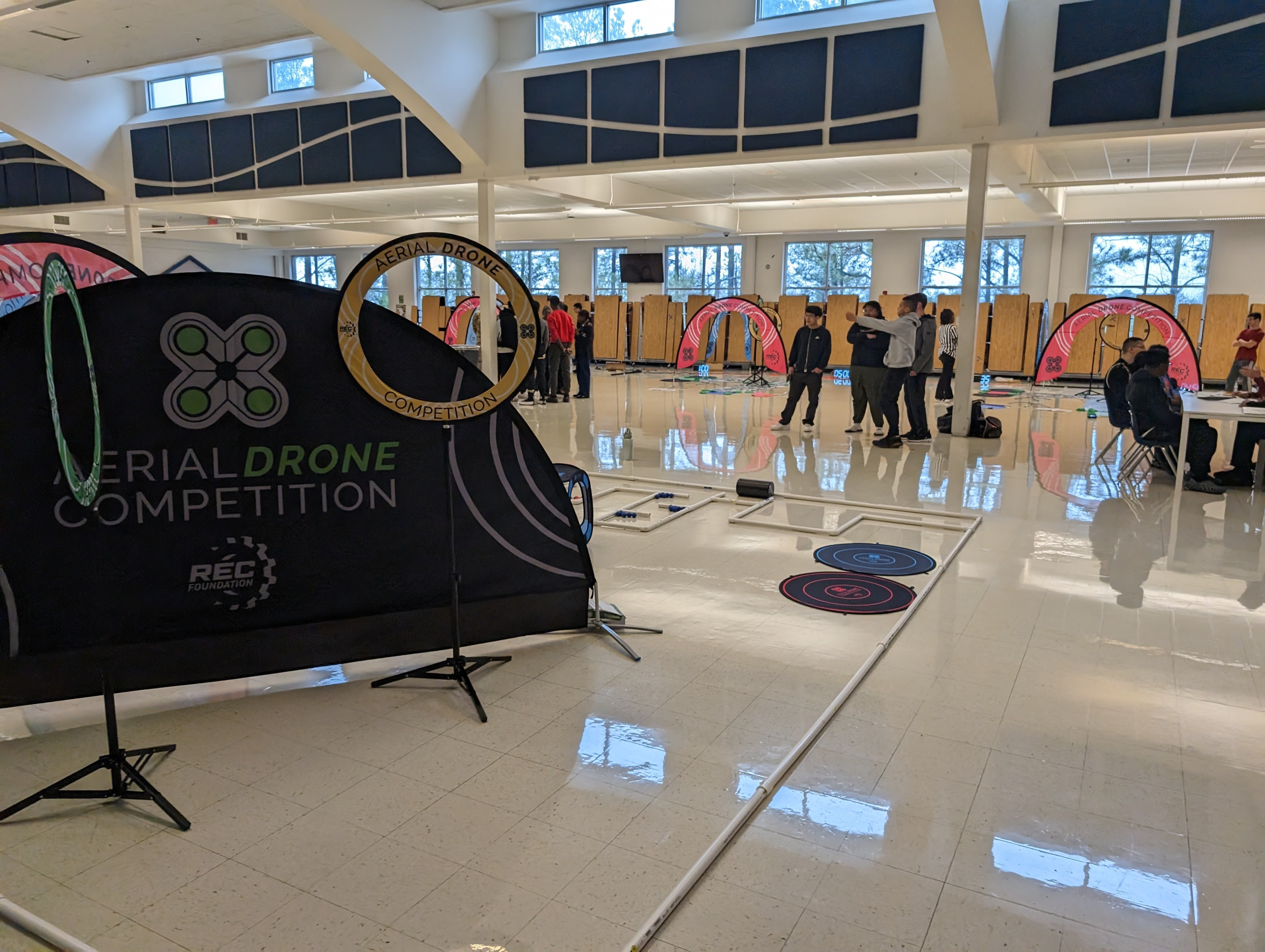
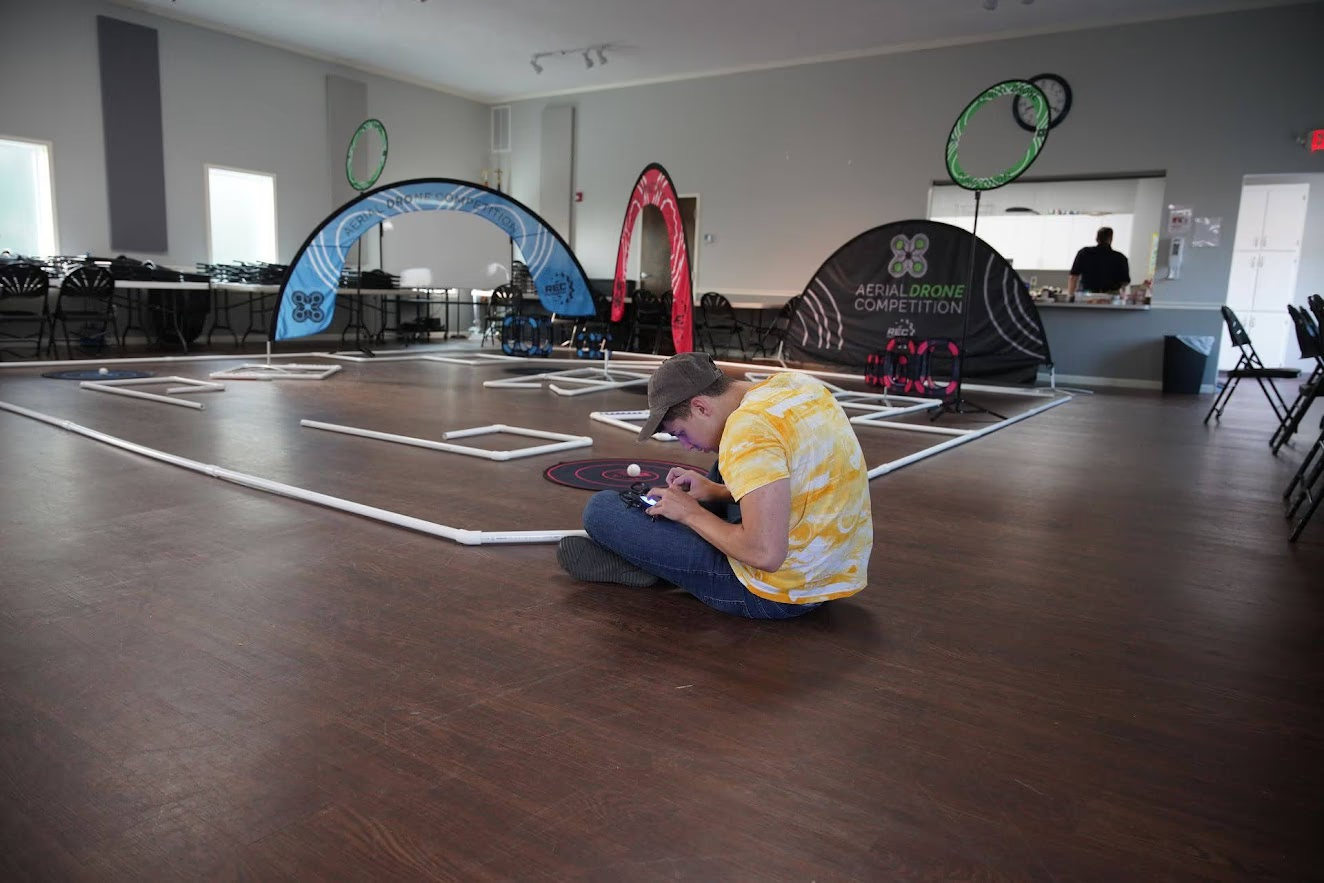
Learn to fly drones and compete in aerial challenges! Hands-on pilot training with real quadcopters. Everything from basic flight principles to autonomous competitions. All classes include content to complete FAA certification.
| Level | Topic | Lesson |
|---|---|---|
| 4th Grade | Geometry | Navigation Angles Plan your flight path through an obstacle course using basic geometry. Turn 90 degrees left, 45 degrees right. Estimate angles before you fly them. 4.G |
| 4th Grade | Light, Sound, & Motion | Four Forces of Flight Identify thrust, drag, lift, and gravity on a quadcopter. Tilt forward: what's unbalanced? Hover: what's balanced? Fly and observe. S4P3 |
| 8th Grade | Functions/Geometry | 3D Pythagorean Distance Start with your drone at a known position. Calculate straight-line distance using sqrt(x^2 + y^2 + z^2) to target destination. Turn to the computed heading, then fly the computed distance to verify the direct path. 8.G |
| 8th Grade | Force/Energy | Thrust vs. Weight Calculate the thrust needed to hover (thrust = weight). Why do the motors spin faster when tilted even though the drone doesn't go up? Add payload and recalculate. S8P3 |
| Geometry | Right triangle trigonometry, circles, volume, and surface area | 3D Navigation Navigate an obstacle course in 3D space. Calculate distances between waypoints using 3D distance formula. Calculate the volume of the air space. G.GMD |
| Pre-Calculus | Trigonometry, polar coordinates, vectors, and parametric equations | Vector Navigation Plan a flight path using vectors. Account for wind as a vector addition problem. Navigate from waypoint to waypoint with heading and magnitude. Pre-Calc |
| Physics | Kinematics (motion), Newton's Laws, gravity, and energy | Free Body Diagrams Draw free body diagrams for hover, climb, and forward flight. Resolve forces into components. Why must the drone tilt to move forward? SP2 |
| AP Physics 1 | Energy, Momentum, Torque, and Rotational motion | Rotational Dynamics How does the drone spin in place? Analyze propeller rotation, angular velocity, and moment of inertia to figure it out. AP 1 Unit 7 |
 Photos coming soon...
Every parachute design gets the same ride: a drone lifts it to a fixed altitude, drops it, and the class measures how long it takes to come down. Canopy shape, suspension length, and gore count all affect the fall, and students get to see balanced and unbalanced forces in action. Kindergartners race slow-falling square parachutes; AP Calculus students fit dv/dt = g - (k/m)v^2 to the very same drop data. The drone's climb is what makes the iteration loop fast - dozens of launches an hour.
| Level | Topic | Lesson |
|---|---|---|
| 2nd Grade | Forces; Matter & Physical Changes | Gravity vs. Air Drop different shapes (flat, crumpled, parachute). Which force wins - gravity pulling down or air pushing up? Predict then test. S2P2 |
| 2nd Grade | Measurement, Money, & Shapes | Measure the Canopy Compare parachutes in circles and squares, different sizes. Measure each canopy across with a ruler. A drone lifts each to the same release altitude for a fair test. Does a bigger parachute = slower drop? 2.MD |
| 3rd Grade | Fractions, Area, & Perimeter | Surface Area Lab Cut rectangular parachutes in three sizes: small, medium, large. Measure length and width then calculate area. A drone drops them from the same height. Which area wins the slow-fall contest? 3.MD |
| 4th Grade | Light, Sound, & Motion | Balanced Forces Build parachutes, then use a drone to release them from a tall, repeatable altitude. Observe that once the upward drag force grows to match the downward pull of gravity, the net force is zero and speed stops changing - that steady speed is terminal velocity. S4P3 |
| 5th Grade | Decimals & Order of Operations | Decimal Timing Time drone-deployed parachutes to hundredths of a second. Calculate averages across 3 drops. Compare designs using decimal subtraction. 5.NBT |
| 6th Grade | Ratios | Area-to-Weight Ratios Design parachutes with different canopy sizes and payload weights. Drone-drop each from a fixed altitude. Calculate the area-to-weight ratio and unit rate (seconds per square inch). Does doubling the ratio double the fall time? 6.RP |
| 8th Grade | Force/Energy | Terminal Velocity Build parachutes varying shroud length, gore shape, and vent size. Drone-drop each from identical altitudes. Video-track velocity vs. time and mark the point where net force goes to zero and speed levels off. S8P3 |
| Advanced Algebra | Complex numbers, polynomial functions, and rational expressions | Rational Drag Models Build parachutes with varying canopy area, shroud length, and gore shape. Model terminal velocity = sqrt(weight / drag_coefficient) as a rational expression. Drone-drop each design from the same altitude to verify. A.APR |
| Calculus AB / BC | Integration, differential equations | Integration of Drag Build parachutes with varying shroud length and gore shape. Drone-drop from fixed altitude. Solve dv/dt = g - (k/m)v^2, integrate velocity to get position, and compare to the measured drop. AP Calc |
| Physics | Kinematics (motion), Newton's Laws, gravity, and energy | Free Fall Lab Build payloads with and without parachutes. Drone-drop from a measured altitude; video-track the fall. Fit position vs. time and extract acceleration. Compare free-fall g to 9.8 m/s2 and quantify the drag offset. SP1 SP2 |
| AP Physics 1 | Kinematics, Dynamics, Circular motion, and Gravitation | Air Resistance Modeling Build parachutes varying shroud length, gore shape, and canopy area. Drone-release from a repeatable altitude for clean trials. Video-track position, fit velocity-dependent drag, and extract drag coefficients per design. AP 1 Units 1-2 |
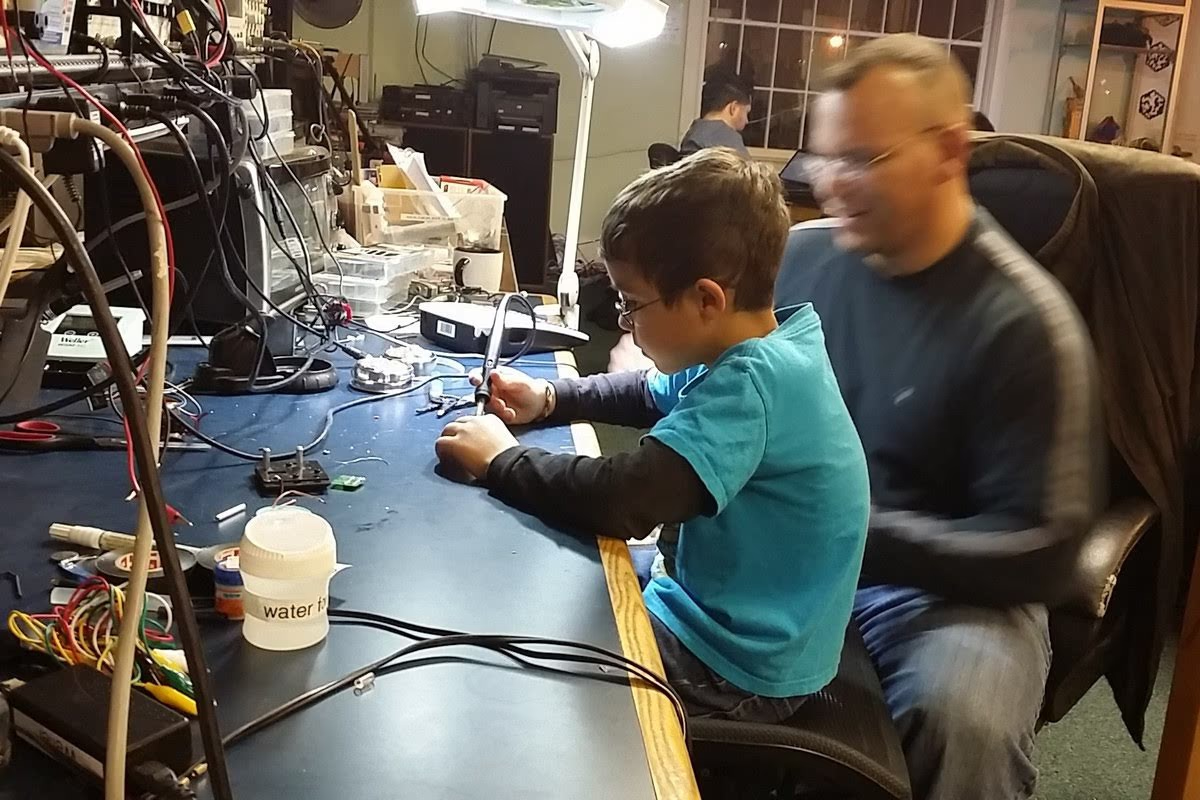
Learn real soldering skills and build your own LED project to take home. Hands-on electronics workshop. Safe, supervised instruction for schools and groups.
| Level | Topic | Lesson |
|---|---|---|
| 5th Grade | Electricity, Magnetism, & Chemistry | Build a Circuit Make your own paper and foil circuit board. Then solder real electronic components on to make a working circuit. Your LED lights up when the circuit is complete! S5P2 |
| 8th Grade | Force/Energy | LED Tree Solder a multi-LED tree and measure voltage across each branch with a multimeter. What happens to the other LEDs when one branch opens? Why? S8P5 |
| Physics | Waves, sound, light/optics, electricity, and magnetism | Ohm's Law Lab Solder a circuit with resistors in series and parallel. Measure V, I, and R with a multimeter. Verify V=IR and calculate power dissipation. SP5.d |
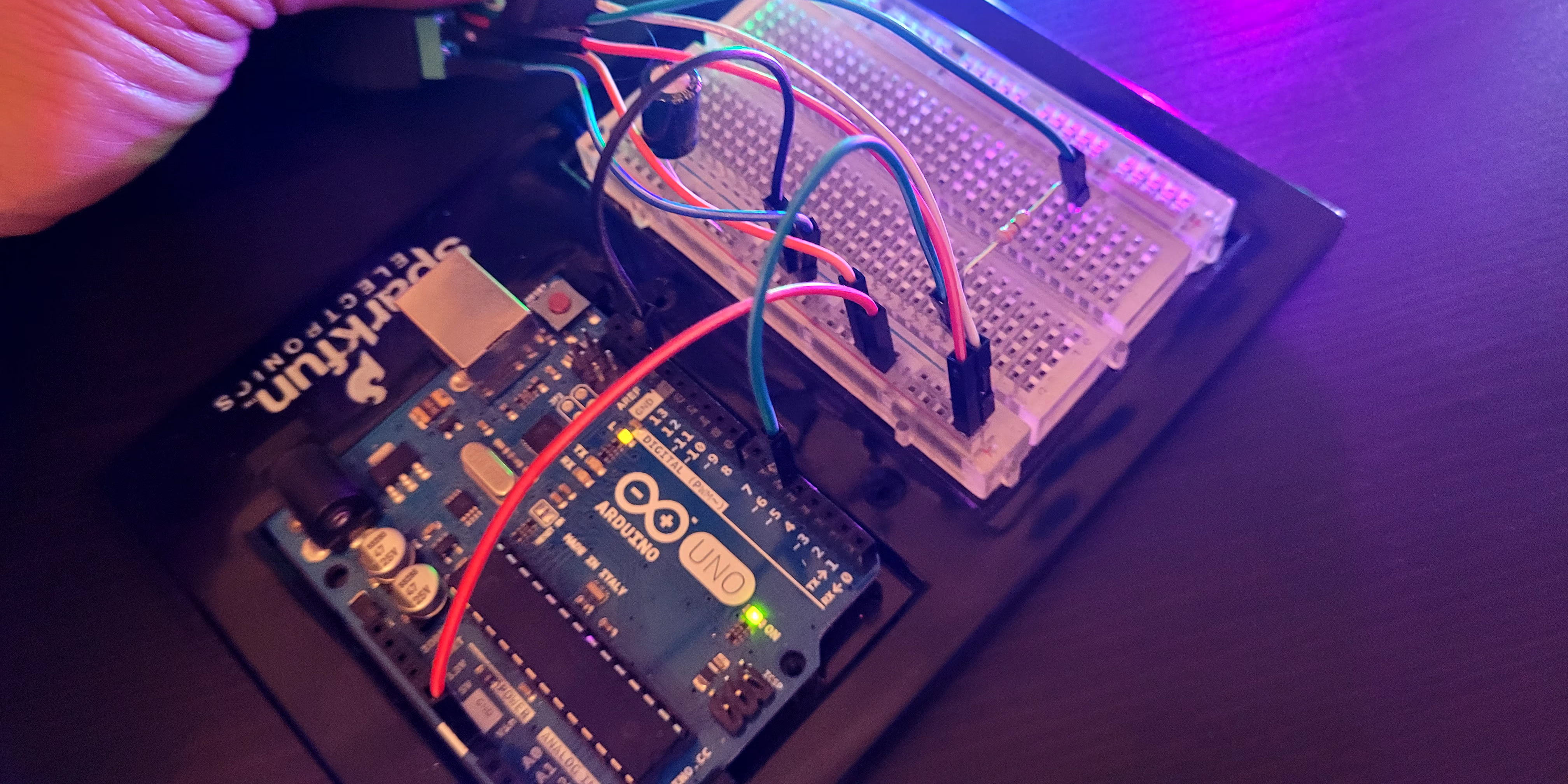
Learn to program Arduino microcontrollers and build interactive electronics projects! Intro to coding and hardware. Hands-on maker workshop. These same chips are baked into everything around us - cars, thermostats, factory lines, satellites, medical devices, and every robot worth building. Learning to use an Arduino opens up a world of automation, robotics, and embedded systems that keeps getting bigger as students grow into it. Physical-computing skills that feel like play at age 10 become the foundation of real engineering by high school.
| Level | Topic | Lesson |
|---|---|---|
| 5th Grade | Electricity, Magnetism, & Chemistry | Programmable Circuits Wire LEDs, buttons, and sensors to a microcontroller. Write code to control the circuit. Make lights blink in patterns you design. S5P2 |
| 6th Grade | Expressions/Stats | Sensor Thresholds Write an inequality for your alarm: if sensor > threshold, beep. Rearrange the expression to find the trigger temperature. Test it with real sensor data. 6.EE |
| 8th Grade | Equations | Linear Functions from Sensor Data Graph Arduino temperature sensor voltage vs. actual temperature. Find the linear function y = mx + b from the data. Use your equation to predict the temperature at a new voltage reading, then verify. 8.F |
| 8th Grade | Force/Energy | Sensor-Driven Circuits Wire light sensors, temperature sensors, and motors. Program the Arduino to respond to input. Build a circuit that reacts to the environment. S8P5 |
| Algebra | Linear functions, equations/inequalities, and rate of change | Sensor Data Modeling Read temperature sensor data over time. Write a linear equation that models the cooling curve. Predict the temperature at time t. A.CED |
| Advanced Algebra | Radical functions, logarithmic modeling, and statistical reasoning | Exponential RC Charging Capacitor voltage follows V(t) = V0(1 - e^(-t/RC)). Measure the charging curve, fit the model, then invert it with logarithms to solve for t at any target voltage. F.LE F.BF |
| Pre-Calculus | Polynomial, rational, exponential, and logarithmic functions | Logarithmic Sensor Response Photoresistors respond logarithmically to light. Calibrate a sensor and derive the log conversion formula. Invert it to get light intensity from voltage. F.BF |
| Calculus AB / BC | Integration, differential equations | Solving RC Differential Equations The RC circuit obeys dV/dt = -V/RC. Solve the Ordinary Differential Equation (ODE) analytically, then compare to Arduino-measured data. Measure the time constant three ways. AP Calc |
| AP Statistics | Data exploration, sampling, experiments, and probability | Sensor Data Exploration Collect temperature, light, or motion data from Arduino sensors. Create histograms and scatter plots. Describe the distribution and identify patterns. S.ID |
| Physics | Waves, sound, light/optics, electricity, and magnetism | Speed of Sound How fast does sound travel? Wire up an ultrasonic rangefinder, read the raw echo pulse to get the round-trip time in microseconds, and solve for the speed using a known distance. Compare the raw timing, the sensor-calculated value, and the textbook value - where does the disagreement come from? SP4 |
| AP Physics C | Electricity and Circuitry | RC Circuit Analysis Build RC circuits and measure exponential charge/discharge curves. Fit the equation V(t) = V0*e^(-t/RC). Determine the time constant. AP C E&M |
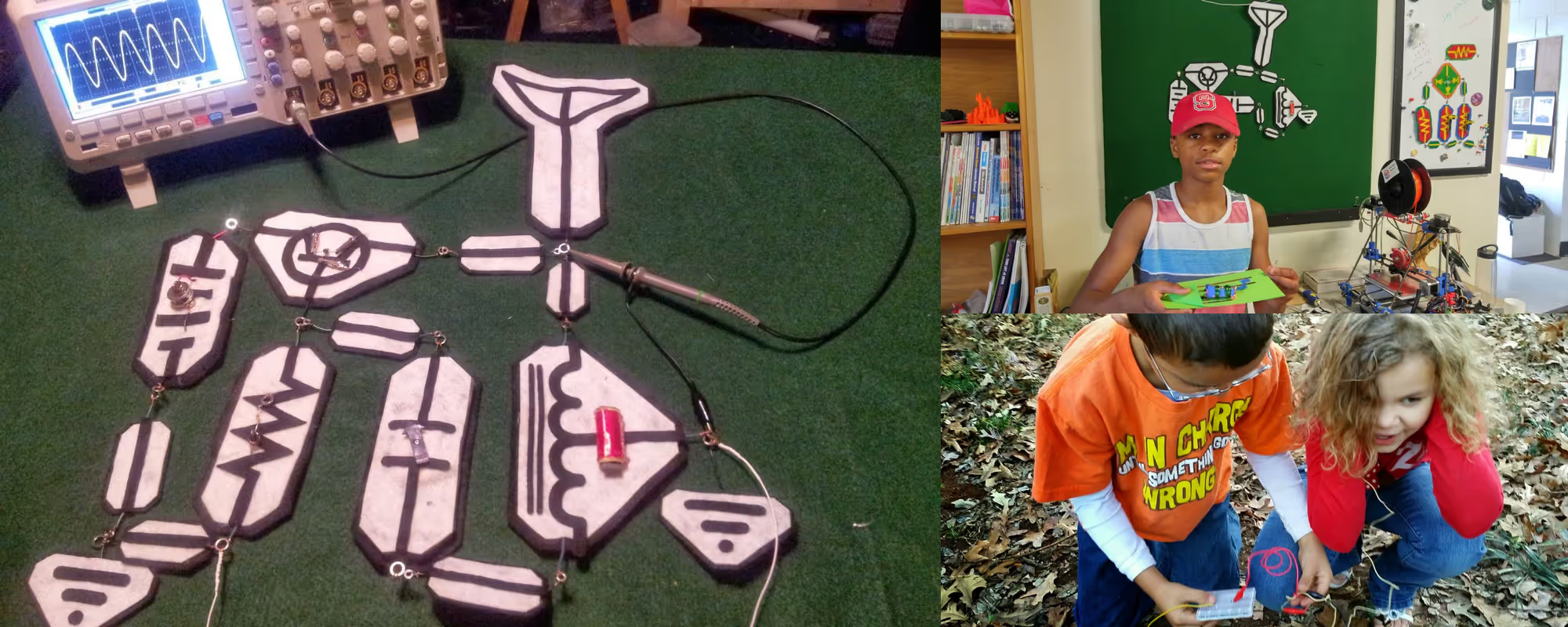
Students can build a radio in the classroom. Five parts, soldered to foil on paper, and suddenly you can send a signal that you can hear on a radio across the room. Slide a ferrite core to tune the frequency, change the battery voltage to push the signal farther, hear the math of LC resonance across the room - no wires, just the electromagnetic waves you control. Radio isn't magic, it's five components a 5th grader can solder and a physics concept that a high schooler can derive. Take the radio home and show the world that electronics and radio are within their grasp.
| Level | Topic | Lesson |
|---|---|---|
| 5th Grade | Electricity, Magnetism, & Chemistry | Circuit from Scratch Build a working AM transmitter from 5 simple parts soldered onto paper and foil. Learn what each of the components does on its own and then how it contributes to make a real radio work. S5P2 |
| 8th Grade | Force/Energy | EM Waves in Action Solder an AM transmitter and make a germanium diode receiver. Change the battery voltage and see how that affects the distance the radio works? S8P4 S8P5 |
| Physics | Waves, sound, light/optics, electricity, and magnetism | LC Resonance Solder a working AM transmitter. Trace the signal through the schematic stage-by-stage. Calculate the resonant frequency from component values, then slide the ferrite and find your signal with a commercial AM radio to see where you actually land. SP5.d |
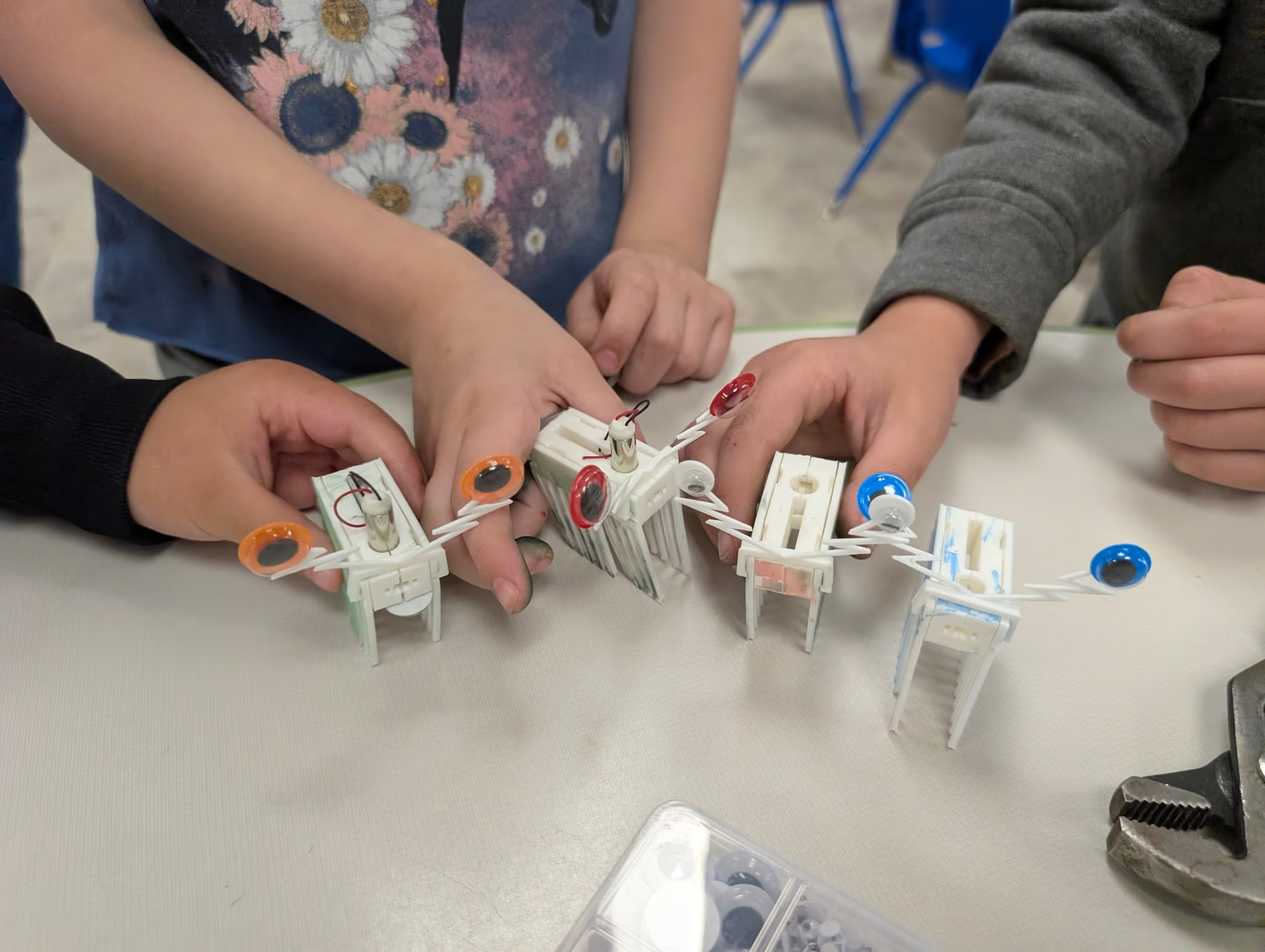
Build a vibrating brush bot that walks on its own! Fun intro to circuits and motors. No soldering required - great for younger makers.
| Level | Topic | Lesson |
|---|---|---|
| Kindergarten | Counting & Sorting | Count the Legs Count the legs on your bot. 3 legs? 4? 6? Compare with a partner - who has more? Which leg count walks straightest? K.CC |
| Kindergarten | Physical Attributes & Motion (pushes/pulls) | Vibration Motion Turn on the motor and watch it shake! Place it on a table and observe how vibration makes it move. Is it a push or a pull? SKP2 |
| Kindergarten | Addition/Subtraction & Geometry | Race Day Race bug bots across the table! Who went farthest? Count squares on the grid to compare. Practice "more than" and "less than." K.OA |
| 1st Grade | Light & Sound; Magnets | Surface Sound Test Run bug bots on a table, a book, and carpet. Listen to the different sounds. Which surface makes the loudest buzz? The quietest? S1P1 |
| 4th Grade | Light, Sound, & Motion | Vibration and Motion The motor vibrates (sound!) and the unbalanced weight creates motion (force!). Change the weight position and observe how the path changes. S4P2 S4P3 |
| 5th Grade | Electricity, Magnetism, & Chemistry | Simple Circuit Creatures Connect battery to motor with wires - that's a circuit! Draw the circuit diagram - a schematic. Trace the path electricity follows. What happens if you break the circuit? S5P2 |
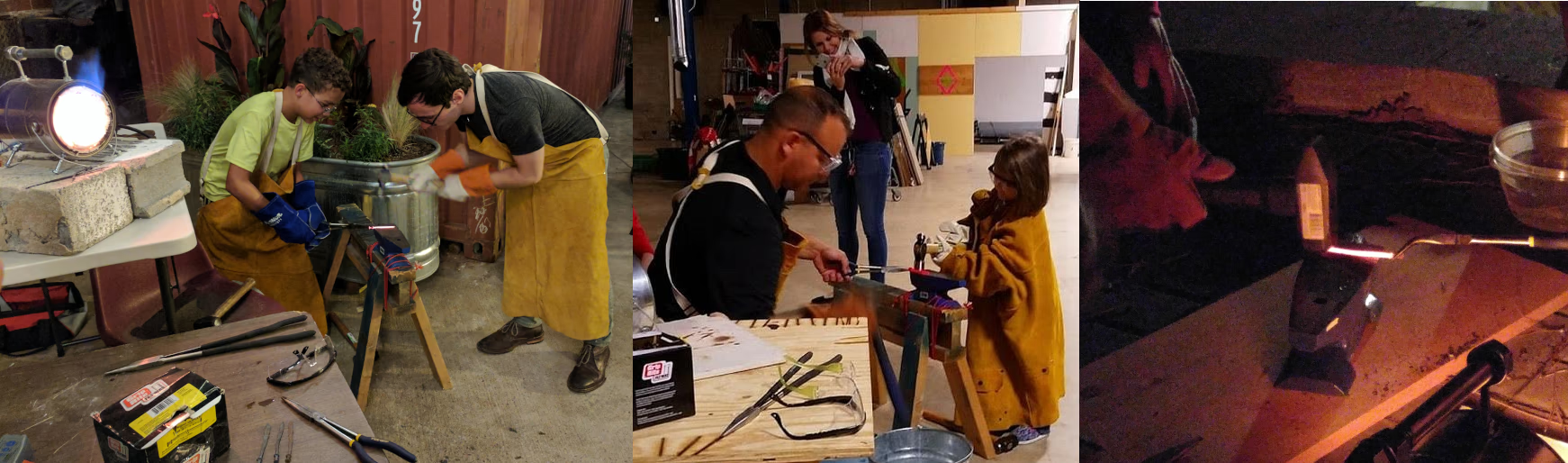
Forge your own mini sword at a real anvil - a technique that predates writing. Students see conduction, radiation, and convection all at once as raw steel shifts color under the heat. Science standards get more real when the metal you just hammered is 1500°F glowing red.
| Level | Topic | Lesson |
|---|---|---|
| 2nd Grade | Forces; Matter & Physical Changes | Hot Metal Changes Watch metal change color as it heats. Hammer it while hot and it bends! Let it cool and it's hard again. Is this change reversible? S2P1 |
| 3rd Grade | Heat Energy | Heat Transfer in Action Watch heat move from forge to metal (conduction). See the metal glow (radiation). Feel warmth from across the room (convection). All three types in one experience! S3P1 |
| 5th Grade | Electricity, Magnetism, & Chemistry | Change Detective Heating metal is a physical change (reversible). But the scale that forms? That's oxidation - a chemical change! Identify both at the forge. S5P1 |
| 8th Grade | Matter/Chemistry | Phase Diagrams Observe metal transition through phases. Map temperature to physical state. Identify crystalline structure changes when metal is quenched vs. annealed. S8P1 |
| Advanced Algebra | Radical functions, logarithmic modeling, and statistical reasoning | Cooling Curves Metal cooling follows Newton's law: T(t) = T_env + (T_hot - T_env)e^(-kt). Fit an exponential model to real temperature-vs-time data from the forge. F.LE |
| Chemistry | Chemical reactions | Oxidation Reactions Watch iron oxidize at high temperature (scale formation). Measure temperature changes as an exothermic/endothermic process. Balance the oxidation equation. SC5 SC6 |
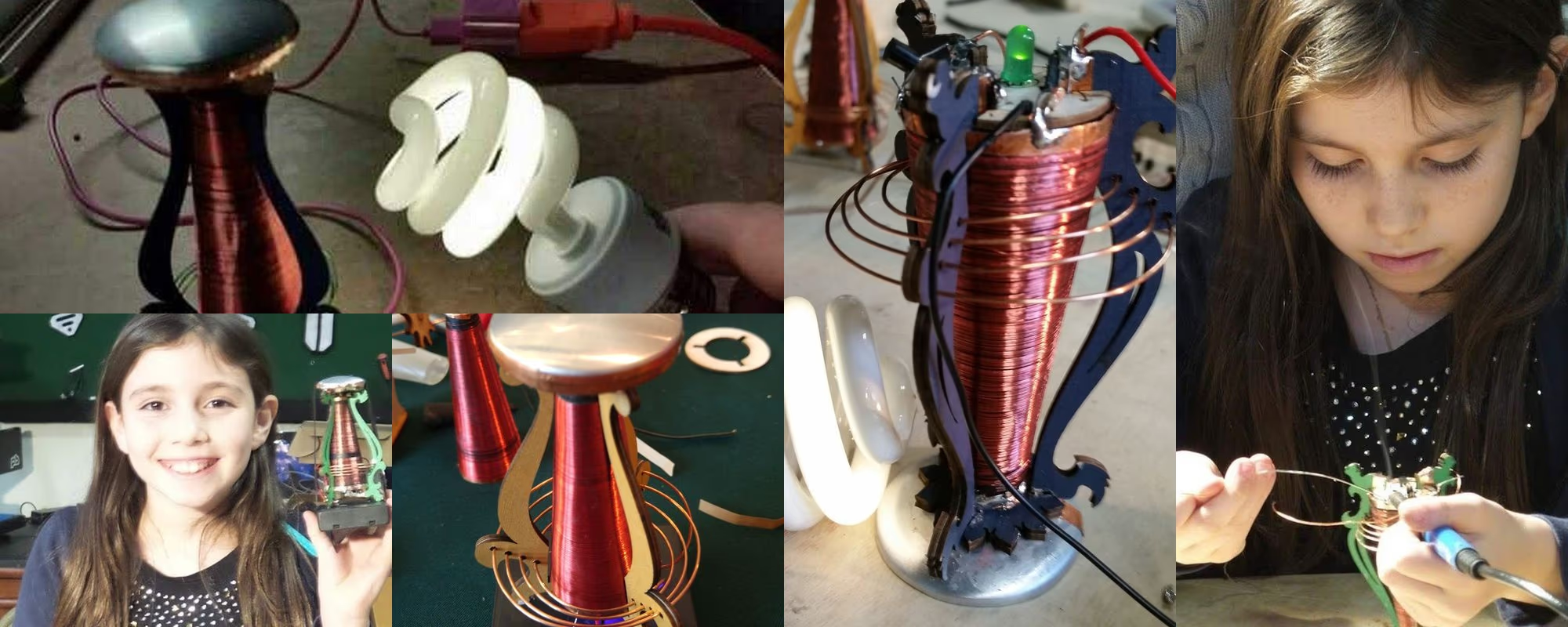
Put a fluorescent bulb in your hand. Get it near the Tesla coil. The bulb lights up - no screwing it in, no touching. Students build their own coil from scratch, take it home, and spend the next year teaching others about the magic of inductors and AC electricity that made Nikola Tesla a household name.
| Level | Topic | Lesson |
|---|---|---|
| 5th Grade | Electricity, Magnetism, & Chemistry | Electricity Meets Magnetism Build a mini Tesla coil and watch electricity arc through the air! See how changing electric current creates a magnetic field. S5P2 S5P3 |
| 8th Grade | Force/Energy | Electromagnetic Induction Build a Tesla coil and observe wireless energy transfer. How does a changing magnetic field create voltage? Explore Faraday's discovery hands-on. S8P5 |
| Physics | Waves, sound, light/optics, electricity, and magnetism | Turn Ratio and Step-Up Math Count the turns on the primary and secondary coils. Compute the turn ratio. Apply transformer math to predict the secondary voltage from a small battery input. Then estimate the real output by the spark length - air breaks down at roughly 1 kV per millimeter. Do the numbers agree? SP5.e |
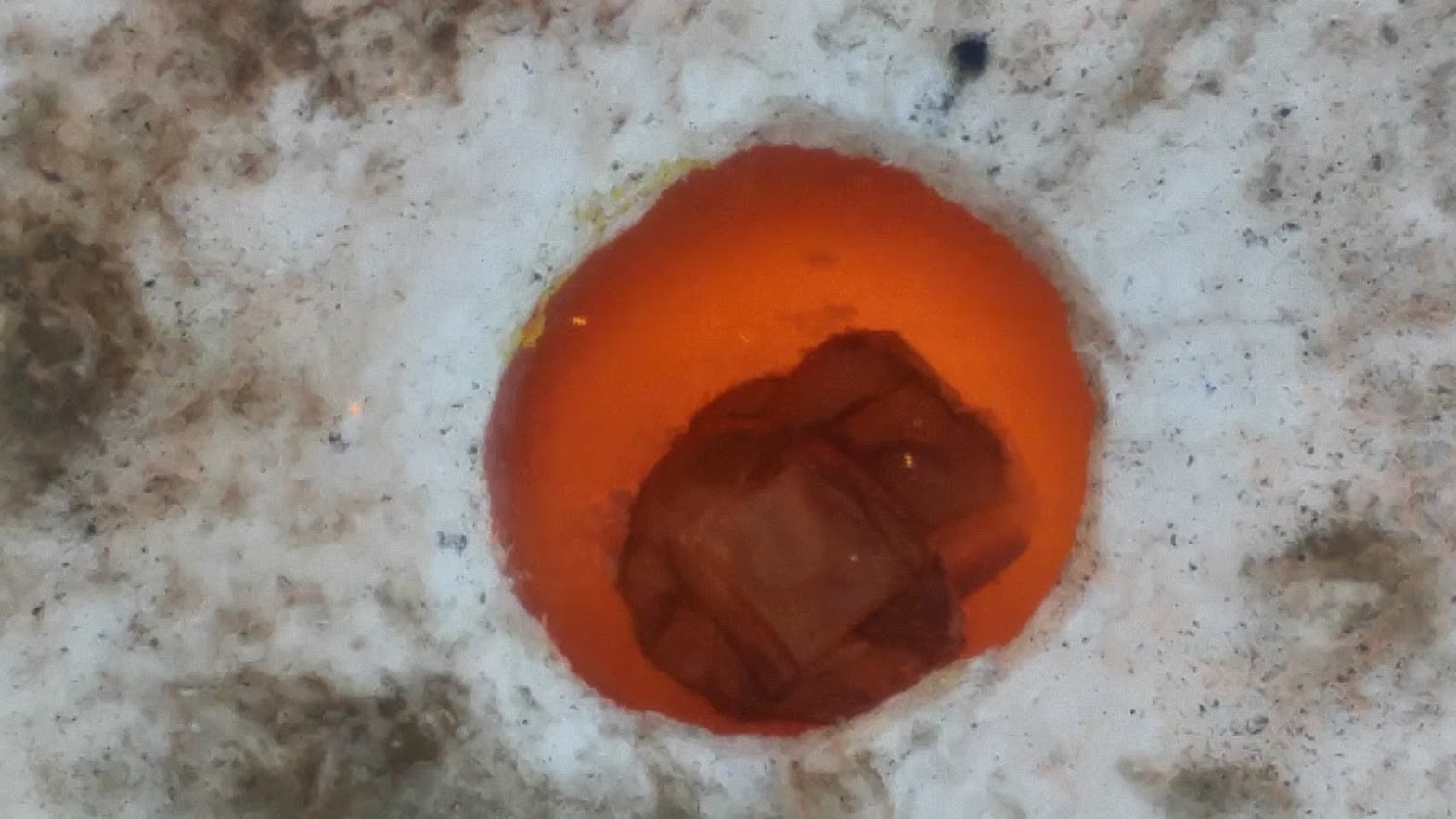 Photos coming soon...
Cast your own aluminum creation from a mold you designed - a process older than the wheel. Students feel radiant heat from the crucible across the room, watch molten metal pour, and see it freeze into the exact shape they carved. What they take home is the design they carved, rendered in metal - permanent, one-of-a-kind, and theirs.
| Level | Topic | Lesson |
|---|---|---|
| Geometry | Right triangle trigonometry, circles, volume, and surface area | Volume of Revolution Calculate the volume of a cylindrical mold. Compare to the irregular casting using water displacement. Which is more accurate - formula or measurement? G.GMD |
| Calculus AB / BC | Integration, differential equations | Heat Integration Newton's Law of Cooling is a separable differential equation. Solve it, then integrate to find total heat released as aluminum solidifies. AP Calc |
| Chemistry | Chemical reactions | Enthalpy of Fusion Calculate the energy required to melt aluminum (heat of fusion). Observe the phase diagram in real time. Relate temperature plateaus to energy absorption. SC4 SC6 |
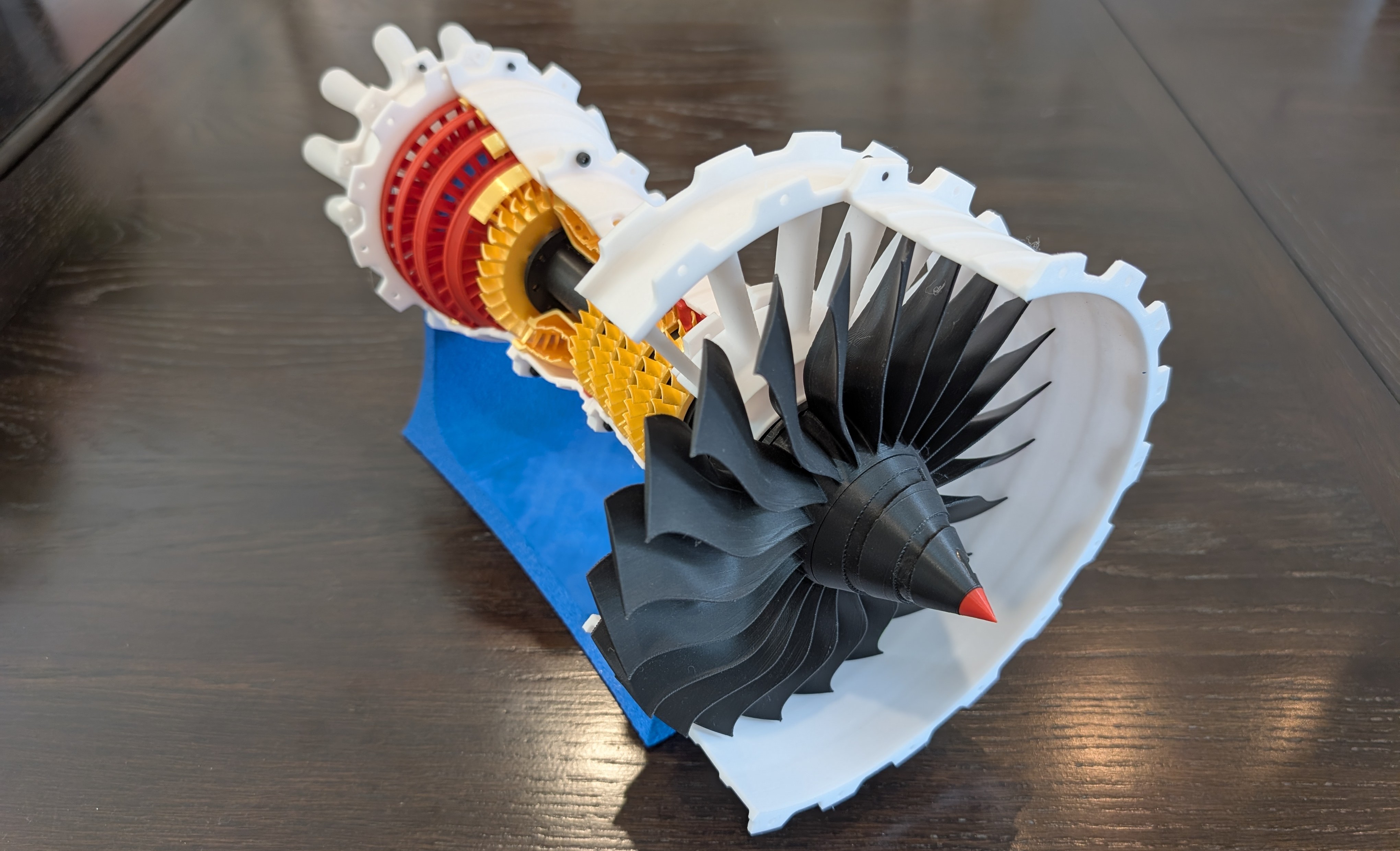
Start with an idea. Model it in CAD. Slice it with CAM software, choosing how the printer will build it - strong or fast, solid or hollow, smooth or textured. Watch your printer build your design layer by layer into something you can hold. This is the same CAD/CAM workflow engineers use to make everything from cosplay helmets to rocket engine brackets.
| Level | Topic | Lesson |
|---|---|---|
| 3rd Grade | Fractions, Area, & Perimeter | Design by the Numbers Design a nameplate in CAD. Set the length and width, then calculate the area. Add a border and figure out the perimeter. Print it! 3.MD |
| 4th Grade | Geometry | Angle Design Challenge Design a ramp in CAD. Set the angle to 30, 45, and 60 degrees. Print each and race a marble down. Which angle wins? 4.G |
| 5th Grade | Volume | Volume in Real Life Design a container in CAD. Calculate the volume before printing. Does the printed piece hold exactly as much water as you calculated? 5.MD |
| 7th Grade | Geometry/Probability | Cross Sections Slice a 3D model and examine the cross section. Predict the shape before slicing. Design objects with specific cross-sectional geometry. Understanding conic sections is a little easier when you can hold them in your hand. 7.G |
| 8th Grade | Functions/Geometry | Volume and Pythagorean Design Design a box with a diagonal brace. Use the Pythagorean theorem to calculate the brace length. Compute the volume, then print and verify. 8.G |
| Geometry | Geometric reasoning, proofs, transformations, and congruence | Transformations in CAD Apply translations, rotations, and reflections to design parts in CAD software. Verify congruence between mirrored components. Print and test fit. G.CO |
| Geometry | Right triangle trigonometry, circles, volume, and surface area | Volume & Surface Area Design cylinders, cones, and spheres in CAD. Calculate volume and surface area from formulas before printing. Measure the finished piece and compare - how close is reality to the math? G.GMD |
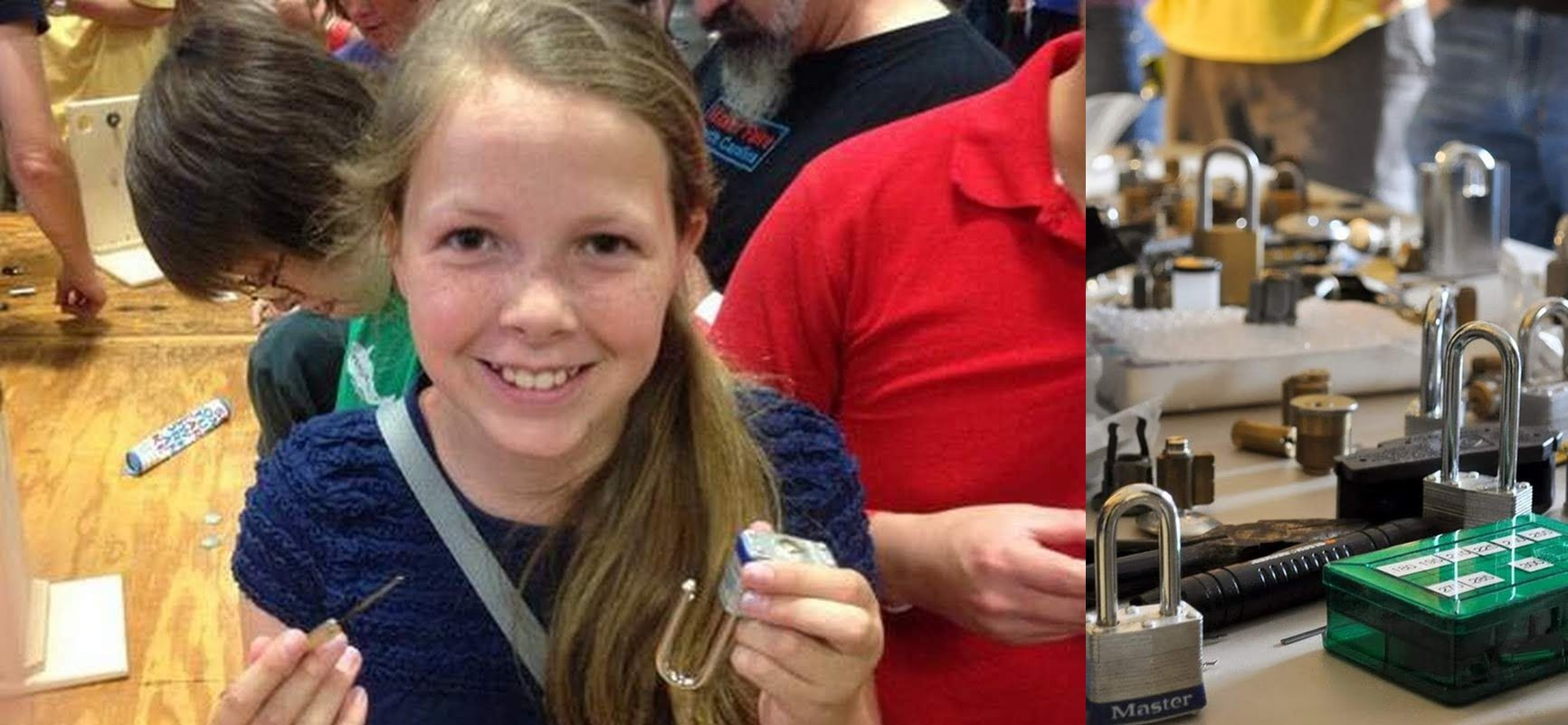
Brass bits or digital bytes, the security mindset is the same. Adversaries use paths the designer didn't plan for, and exploit the gaps between the plan and what actually gets built. We will discuss the importance of planning and implementing real security... and the trade-offs that are made. Students learn to open locks by feel alone, with a tension wrench and a pick - the unintended path made physical. The pick also teaches patience - sometimes the lock wants less pressure, sometimes more, and the only way to know is to try, feel, listen to the feedback and try again.
| Level | Topic | Lesson |
|---|---|---|
| 4th Grade | Light, Sound, & Motion | Balanced Until It's Not Feel the moment when a lock gives up. You're pressing the pins and turning the plug - the lock resists and then suddenly it doesn't. What changed about the forces inside at that instant? S4P3 |
| 8th Grade | Force/Energy | Torque vs. Friction Apply steady torque on the plug while pressing each pin up in turn. The plug holds - until it doesn't. What forces were in equilibrium before that moment, and which one wins when the lock gives up? S8P3 |
| Physics | Kinematics (motion), Newton's Laws, gravity, and energy | Free Body of a Pin Stack Draw the free-body diagram for a pin stack inside a locked cylinder: spring from above, pick force from below, friction and normal force from the walls. What configuration makes the torque on the plug non-zero? Why can't you pick the pins in any order? SP2 |
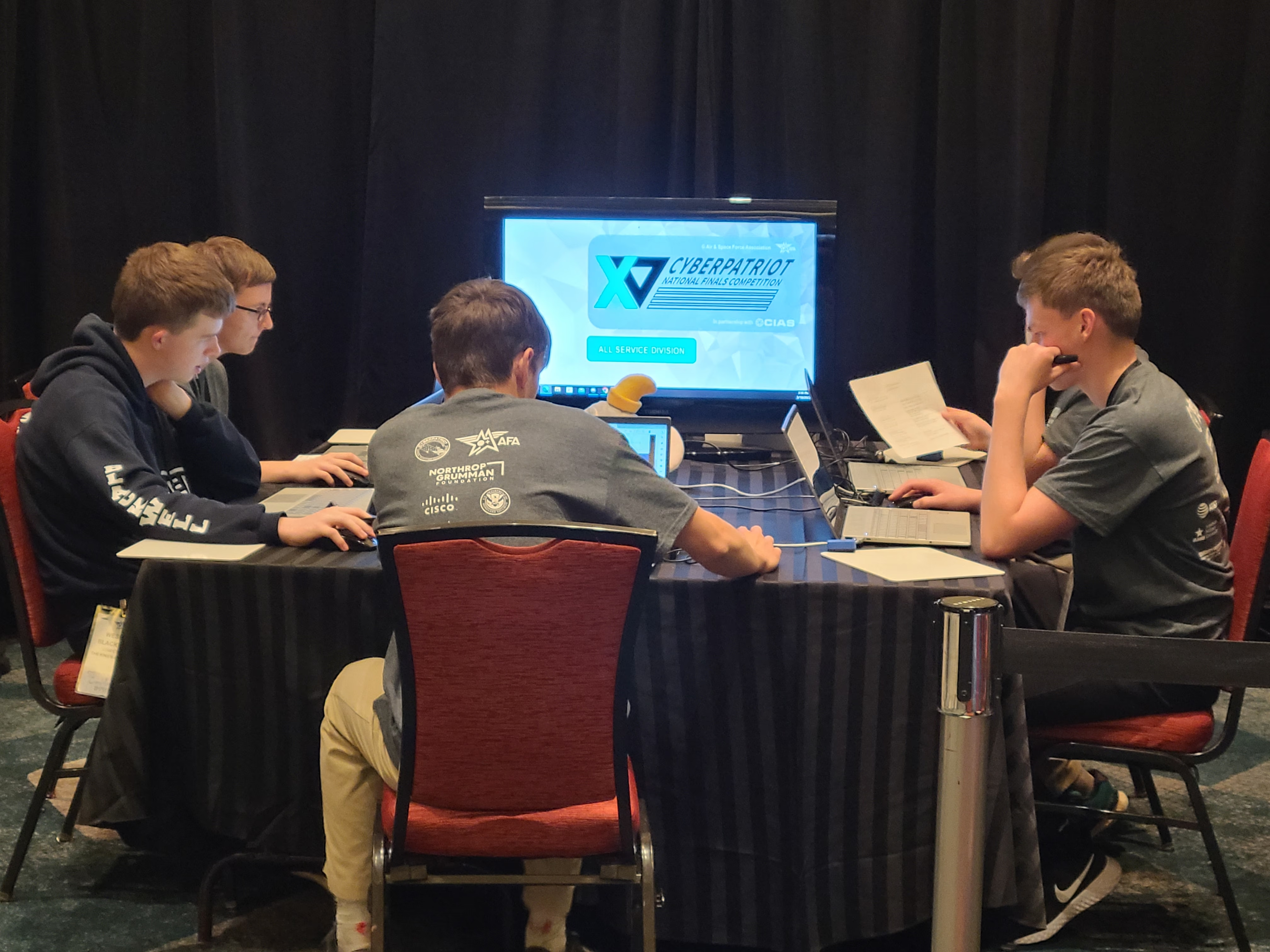
Students start on Blue Team - defenders peeking behind the curtain of everyday systems to see what's actually happening under the hood. Expect eye-popping demos that feel like elite hacker moves but are completely benign. We look at what an adversary could exploit (not how), and learn to prevent those exploits - because the only way to really understand what makes something secure is to see it the way someone trying to break in would. Nothing we do puts any computer or network at risk before, during, or after this session.
| Level | Topic | Lesson |
|---|---|---|
| Geometry | Geometric reasoning, proofs, transformations, and congruence | Boolean Logic Apply AND, OR, NOT logic to crack challenges. Construct logical arguments. Boolean logic and Karnaugh maps train the same deductive habit as geometric proofs - each step justified by a rule you can name. G.CO |
| AP Statistics | Random variables, binomial/normal distributions, and statistical inference | Binomial Brute Force Each guess has probability p of success. Use the binomial cumulative distribution function (CDF) complement to find how many tries give a 90% chance of cracking a PIN. The same calculation is why login lockouts and rate-limiting work. S.MD |
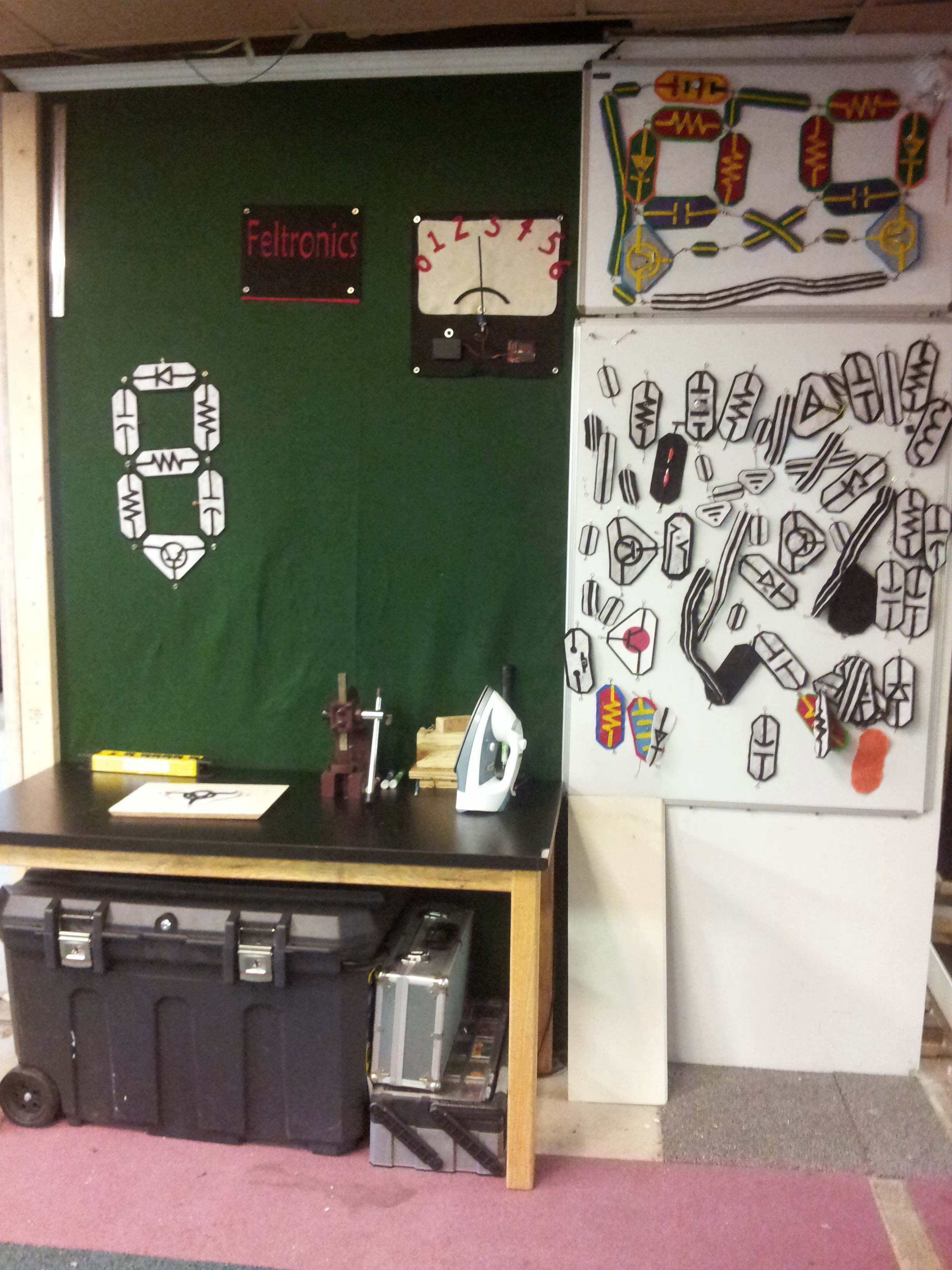 Photos coming soon...
Ciphers, secret codes, and pattern-hunting for elementary students - the hacker mindset with no computers required.
| Level | Topic | Lesson |
|---|---|---|
| 4th Grade | Multi-digit Multiplication/Division | Counting Combinations Start with a simple Caesar cipher made of just one decoder/cipher disk - it's 26 codes a kid can crack. Stack a second cipher disk, third, fourth - each disk multiplies the possibilities by 26. We'll do the math, then students can build their own. How many disks does it take to make it uncrackable? 4.NBT |
| 5th Grade | Decimals & Order of Operations | Multi-Step Cipher Recreate a simplified ADFGVX cipher - the WWI German Army code that a French math teacher cracked mid-war. Substitute each letter on a grid, then scramble the result. Try every ordering, then encode a secret message for a friend to crack. Why does substitute-then-scramble give a different code than scramble-then-substitute? 5.NBT |
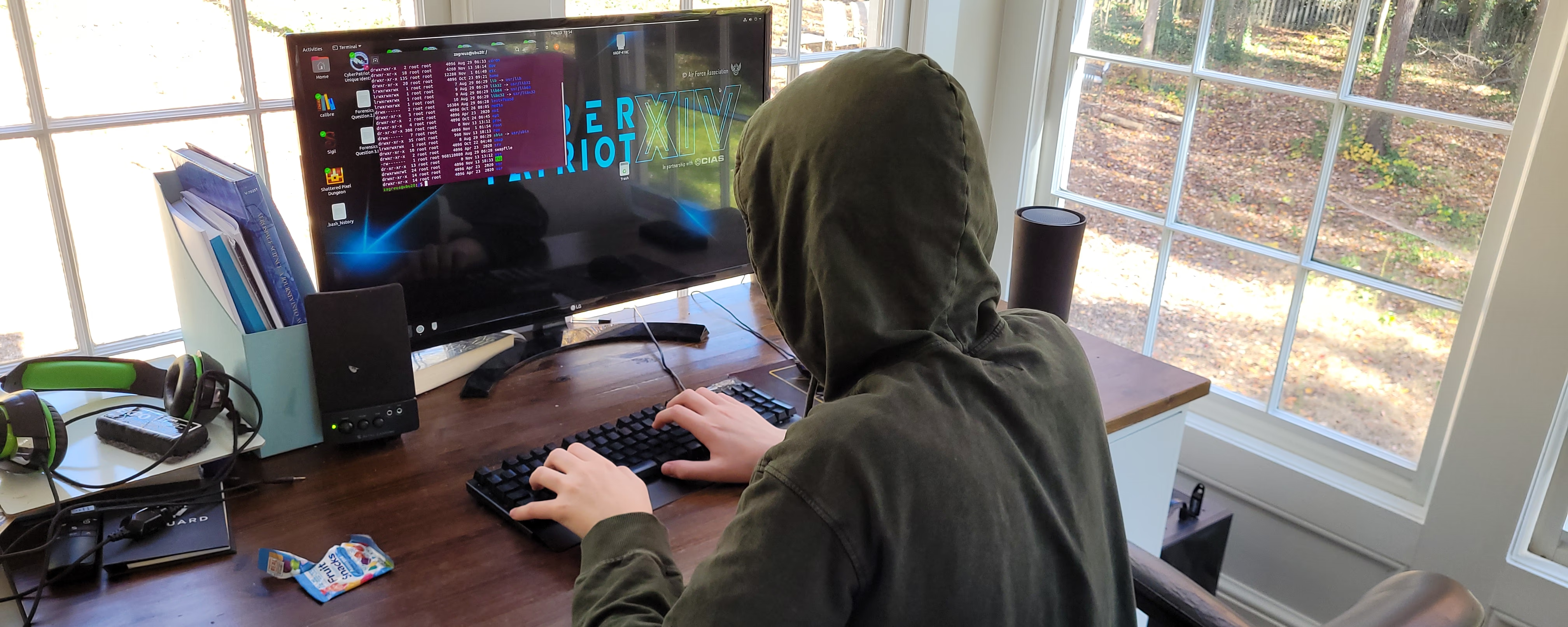
Much of cybersecurity and nearly all of cryptography is a numbers game - math with numbers so large that computers can't manage them. Students explore those numbers at a scale they can see, watching them grow into territory no one can brute-force. They also poke at pre-built Capture-the-Flag puzzles and run a few eye-popping demos that feel like elite hacker moves while being completely benign. Nothing we do puts any computer or network at risk before, during, or after this session.
| Level | Topic | Lesson |
|---|---|---|
| 7th Grade | Geometry/Probability | Guessing Games A locked phone has a 4-digit PIN. A thief tries 1000 random PINs - what's the chance they get in? What if the PIN were 6 digits? Probability games and demos build the intuition for why longer PINs get harder fast. 7.G |
| 8th Grade | Equations | Exponential Password Space A 4-character password has a finite number of possible values. An 8-character one has more - not twice as many. Work the exponents. Now compare a short password with symbols and numbers to a much longer one that's all lowercase letters - which is actually harder to guess? Which classical ciphers make the best use of that same exponential expansion as the key grows? Test your answer in the Capture-the-Flag challenges. 8.EE |
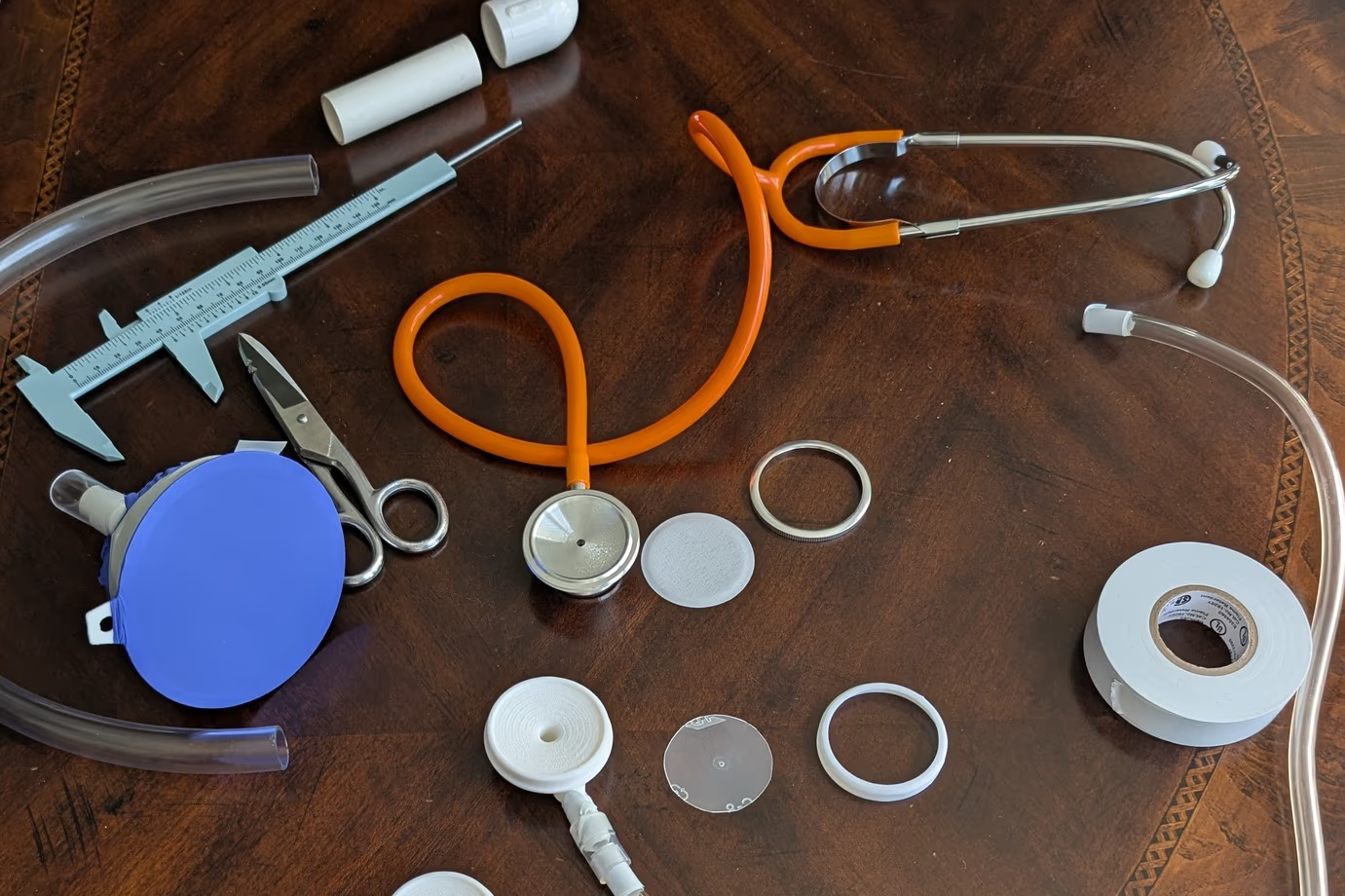
A stethoscope is just a tube, a funnel, and an ear piece. Students build their own from recycled materials and 3D printed parts. Then they go hunting for hidden sounds: ticking clocks, water through pipes, objects hidden inside other objects. Without a stethoscope those sounds are too quiet to pick out; the stethoscope amplifies them enough that you can recognize what's making the sound.
| Level | Topic | Lesson |
|---|---|---|
| Pre-K | Intro to STEM | Mystery Box Sounds Mystery box challenge: press a stethoscope against the box and figure out what's hiding inside by sound alone. What can you hear with the stethoscope that you can't hear without it? Your heart thump, a clock tick, water moving through a pipe in the wall? |
| 1st Grade | Weather; Light & Sound | Build a Stethoscope Build a working stethoscope from tubes and funnels. Listen to heartbeats, ticking clocks, and whispers. How does sound travel through the tube? S1P1 |
| 1st Grade | Light & Sound; Magnets | Sound Mystery Walk After building stethoscopes from tubes and funnels, take them on a listening tour. Can you hear through the wall? Through the desk? S1P1 |
| 4th Grade | Light, Sound, & Motion | Sound Travels Through... Build stethoscopes, then press them against air-filled, water-filled, wood, and metal samples. Compare how well sound transmits through each medium. Rank the materials. S4P2 |
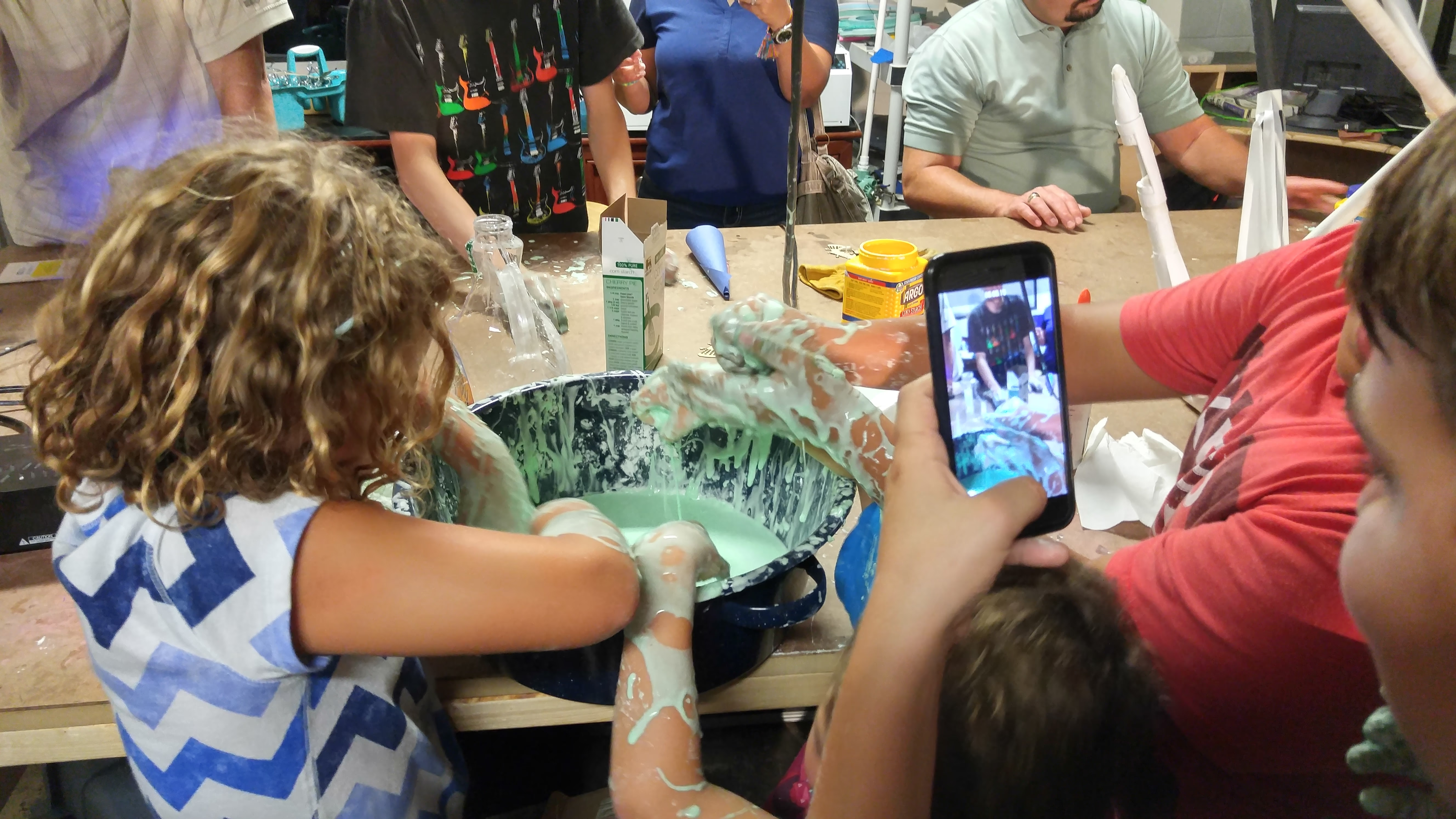
Mix up mysterious oobleck goo and run across a 6-foot trough of it! Non-Newtonian fluids and shear thickening make a lot more sense when you have to run to keep from sinking in. A full-body STEM experience!
| Level | Topic | Lesson |
|---|---|---|
| Pre-K | Intro to STEM | Liquid AND Solid Mix cornstarch and water and watch it act like a liquid AND a solid at the same time! Squish it, run across it, then watch it dance on a speaker. |
| 2nd Grade | Forces; Matter & Physical Changes | States of Matter Breaker After sorting other materials into solids and liquids, mix oobleck and try to sort it - it breaks the rules! Can something be solid AND liquid? S2P1 |
| 2nd Grade | Matter & Physical Changes | Dancing Oobleck Place oobleck on a speaker and watch it dance! Sound waves create vibrations that make the non-Newtonian fluid jump and form shapes. S2P1 |
| 5th Grade | Electricity, Magnetism, & Chemistry | Physical or Chemical? Mix cornstarch and water - is it a physical or chemical change? Test: can you separate them again? Compare to baking soda + vinegar (chemical!). S5P1 |
| 6th Grade | Ratios | Ratio Recipe Lab Change the cornstarch-to-water ratio (1:1, 2:1, 3:1). Which ratio makes the best oobleck? Graph viscosity vs. ratio. Find the sweet spot. 6.RP |
| 7th Grade | Numbers/Equations | Rational Recipe Math Scale the oobleck recipe up and down using rational numbers. Convert between cups, ounces, and grams. What happens at a 3:2 ratio vs. 1:2? 7.NS |
| 8th Grade | Matter/Chemistry | Non-Newtonian Fluid Analysis Investigate viscosity as a property of matter. Why does oobleck resist sudden force? Explore shear-thickening. S8P1 |
| Chemistry | Atomic structure and chemical bonding | Intermolecular Forces Why does oobleck behave differently under force? Explore how polymer chain entanglement creates non-Newtonian behavior at the molecular level. SC4 |
Build a magnetic wand with safely-enclosed magnets and hunt for what sticks. Older kids wind their own electromagnets, map invisible field lines with iron filings and a compass, and hand-crank a generator to turn motion into electricity.
| Level | Topic | Lesson |
|---|---|---|
| Pre-K | Intro to STEM | Magnetic Wand Hunt Wave a magnetic wand around the room and find what sticks! Aluminum foil looks like metal but it won't stick. Some coins stick and some don't. Surprises everywhere. |
| Kindergarten | Counting & Sorting | Ferromagnetic Sort Test everything with a magnetic wand. Sort everything into two piles: things that stick, and things that don't. The puzzle: aluminum foil looks like metal but doesn't stick, and only some coins do. Count each pile - which is bigger? K.MD |
| 1st Grade | Light & Sound; Magnets | Attract or Repel? Test magnetic wands on classroom objects. Make a chart: "sticks" vs. "doesn't stick." Discover poles - push together or pull apart! S1P2 |
| 5th Grade | Electricity, Magnetism, & Chemistry | Electromagnet Builder Wind wire around a nail and connect to a battery - you made an electromagnet! More coils = stronger magnet. Discover the electricity-magnetism connection. S5P3 |
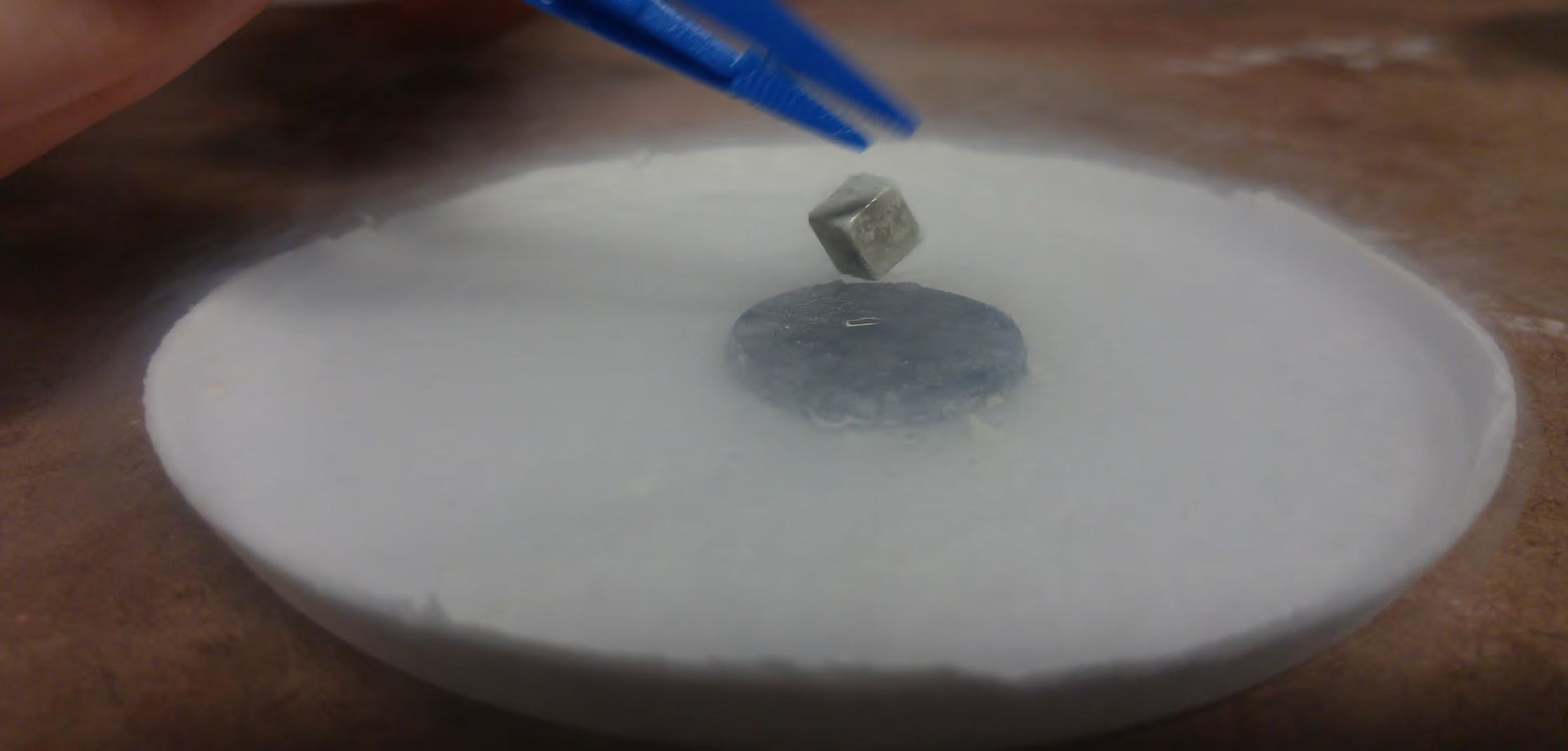
| 8th Grade | Force/Energy | Meissner Levitation Pour liquid nitrogen on a YBCO ceramic disk and watch a magnet float above it - the Meissner effect. Spin it like a top, push it down to feel the springback, try to lift it off - some motions are free, others fight you. Try copper at the same temperature - no levitation. Why does this only work cold? S8P5 |
| Physics | Waves, sound, light/optics, electricity, and magnetism | Field Mapping Map magnetic field lines with iron filings and a compass. Use a smartphone magnetometer to measure field strength at different distances. Verify the inverse-cube relationship. SP5.e |
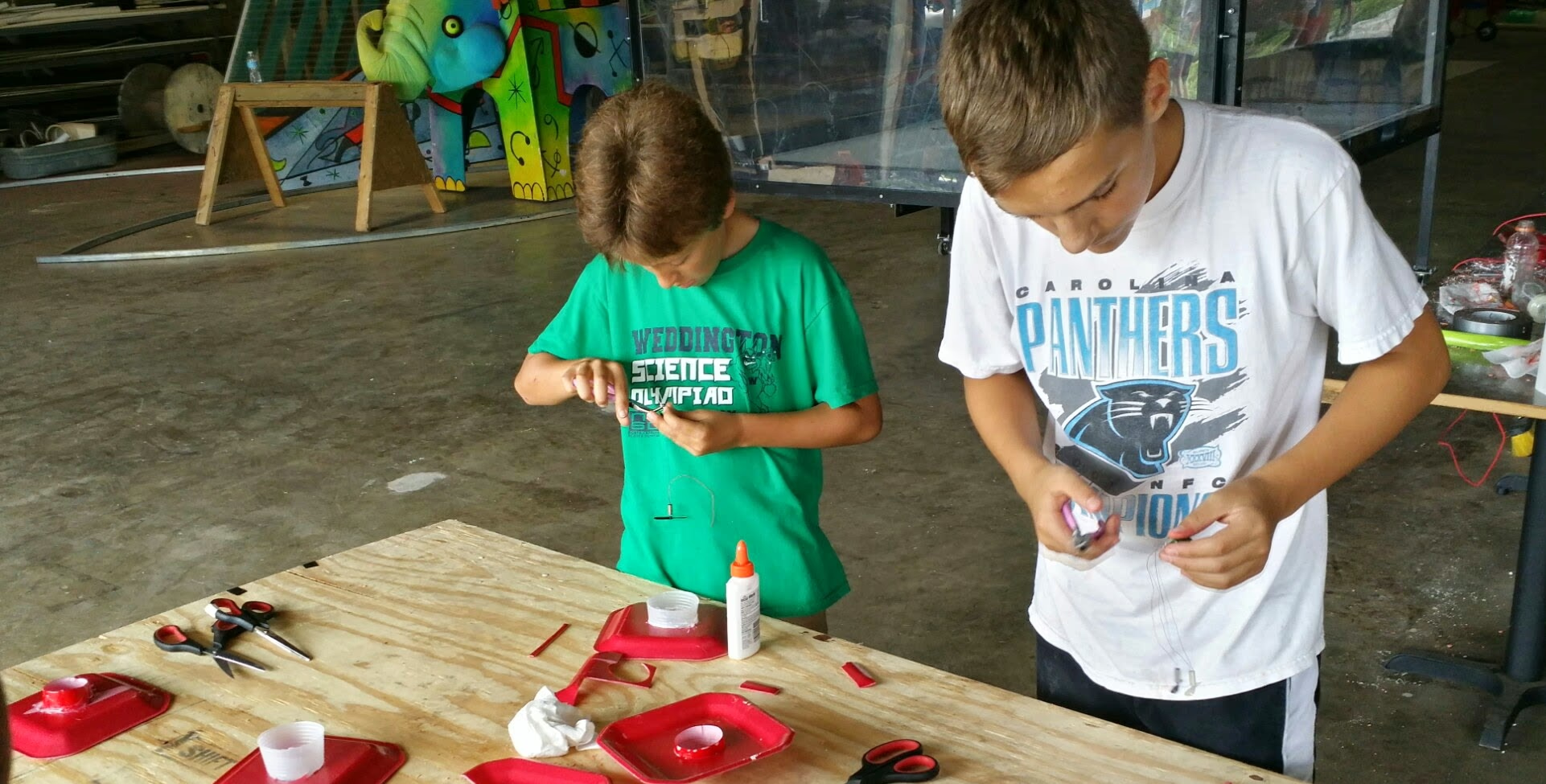
Wind a copper coil, glue two magnets to a paper plate, plug in a phone audio jack, and music comes out of the paper. Not a metaphor: actual audio, actual vibration, actual sound from something students built in twenty minutes. Electricity becomes magnetism becomes motion becomes sound, and kids can touch every step of the chain. At 4th grade students change pitch and volume and feel the plate move differently. In AP Physics they measure wavelength and amplitude and prove the electromagnet equation with their own device. Every student goes home with a working speaker, and the realization that all the speakers they've listened to their whole life are just a simple coil and magnet.
| Level | Topic | Lesson |
|---|---|---|
| 4th Grade | Light, Sound, & Motion | Pitch and Volume Change the song's pitch and volume. Watch the speaker plate move more or less. Louder = bigger vibrations. Higher pitch = faster vibrations. S4P2 |
| 5th Grade | Electricity, Magnetism, & Chemistry | Electromagnet Sound Your speaker IS an electromagnet! The coil creates a changing magnetic field that moves the plate. Electricity becomes magnetism becomes motion becomes sound. We will manipulate the electricity and see how the magnet responds and change the frequency until we can no longer see... but only hear it. S5P3 |
| 8th Grade | Force/Energy | Passive Telephone and Timbre Wire two speakers together, coil to coil - no battery, no amp. Tap the plate of one and the other plate jumps: the physics that drives a speaker also reads it back. Now drive your speaker with a sine wave and a square wave at the same pitch. Same frequency, different sound - why? S8P4 |
| Physics | Waves, sound, light/optics, electricity, and magnetism | Wave Mechanics Measure frequency and amplitude of your speaker's output. Calculate wavelength. Demonstrate the relationship between electromagnet current and sound amplitude. SP4 SP5.e |
 Photos coming soon...
Build spectroscope glasses and see the hidden rainbow inside every light! Learn how scientists identify elements in stars. Hands-on optics.
| Level | Topic | Lesson |
|---|---|---|
| 1st Grade | Weather; Light & Sound | Light Detectives Look at different lights through spectroscope glasses: LED, halogen, fluorescent, neon. Which makes a full rainbow? Which shows only a few bright colors? S1P1 |
| 4th Grade | Light, Sound, & Motion | Light Spectrum Analysis Compare the spectra of incandescent, fluorescent, and LED lights. Why do they look different? Explore how light bends through the diffraction grating. S4P1 |
| 8th Grade | Force/Energy | Electromagnetic Spectrum Use diffraction gratings to observe visible light spectra. Where does visible light sit on the full EM spectrum, and what lies just past what your eye can see? S8P4 |
 Photos coming soon...
Build your own weather instruments from everyday household items! Wind vanes, rain gauges, barometers, thermometers, anemometers, oh my! And then use your instruments to record trends and compare your observations. Many weather-related activities and observations will continue in the classroom long after we leave.
| Level | Topic | Lesson |
|---|---|---|
| Pre-K | Intro to STEM | Watch It Move Build a thermometer and watch the line go up when it's warm and down when it's cold. Build an anemometer and watch the cups spin in the wind - or blow on it and make it spin yourself! |
| 1st Grade | Weather; Light & Sound | Temperature Tracker Build a thermometer and check it daily. Is today warmer or cooler than yesterday? Track patterns on a class chart. S1E1 |
| 1st Grade | Measurement, Time, & Geometry | Read the Ruler Build a rain gauge and read the water level in inches. Measure wind speed by counting spins. Practice reading scales and rulers. 1.MD |
| 2nd Grade | Measurement, Money, & Shapes | Measurement Day Build a rain gauge and a thermometer. Measure rainfall in inches and temperature in degrees. Compare today to yesterday - warmer? More rain? Record on the class chart. 2.MD |
| 4th Grade | Multi-digit Multiplication/Division | Data Computation Build student-made thermometers, barometers, and anemometers. Read each instrument daily, then use multi-digit arithmetic to calculate highs, lows, ranges, and averages for the week. 4.NBT |
| 6th Grade | Ratios | Data Ratios Build a barometer and thermometer from straws, water, and a jar. Log readings hourly, then compute rate-of-change ratios (degrees per hour, millibars per hour). Use the ratios to predict incoming fronts. 6.RP |
| 6th Grade | Water/Weather | Climate Data Collection Build instruments and collect multi-day data sets. Compare your school's microclimate to official weather reports. What factors cause differences? S6E4 |
| AP Statistics | Data exploration, sampling, experiments, and probability | Sampling Design Build instruments, then design a data collection protocol: sampling frequency, station placement, and controls for bias (sun exposure, proximity to buildings). Analyze the resulting dataset for trends and outliers. S.ID |
| AP Statistics | Random variables, binomial/normal distributions, and statistical inference | Two-Sample Testing Build an Arduino thermometer sensor array. Record morning and afternoon temperatures for 30 days. Run a two-sample t-test on your own measurements - is the AM/PM difference statistically significant, or just sample noise? S.IC |
| Earth Systems | Hydrosphere, atmosphere, weather systems, and climate | Atmospheric Data Collection Build a barometric pressure monitoring station with a Raspberry Pi and barometer. Collect two weeks of data. Correlate barometric drops with incoming fronts. Present findings like a professional meteorologist. SES5 |
| AP Environmental Science | Land/Water use, Energy resources, Atmospheric pollution, and Global change | Atmospheric Monitoring Build a student-operated multi-instrument weather station and log long-term atmospheric data with a Raspberry Pi and an assortment of sensors. Compare your local readings to NOAA regional trends. Discuss how human activity reshapes air quality and climate. APES Unit 9 |

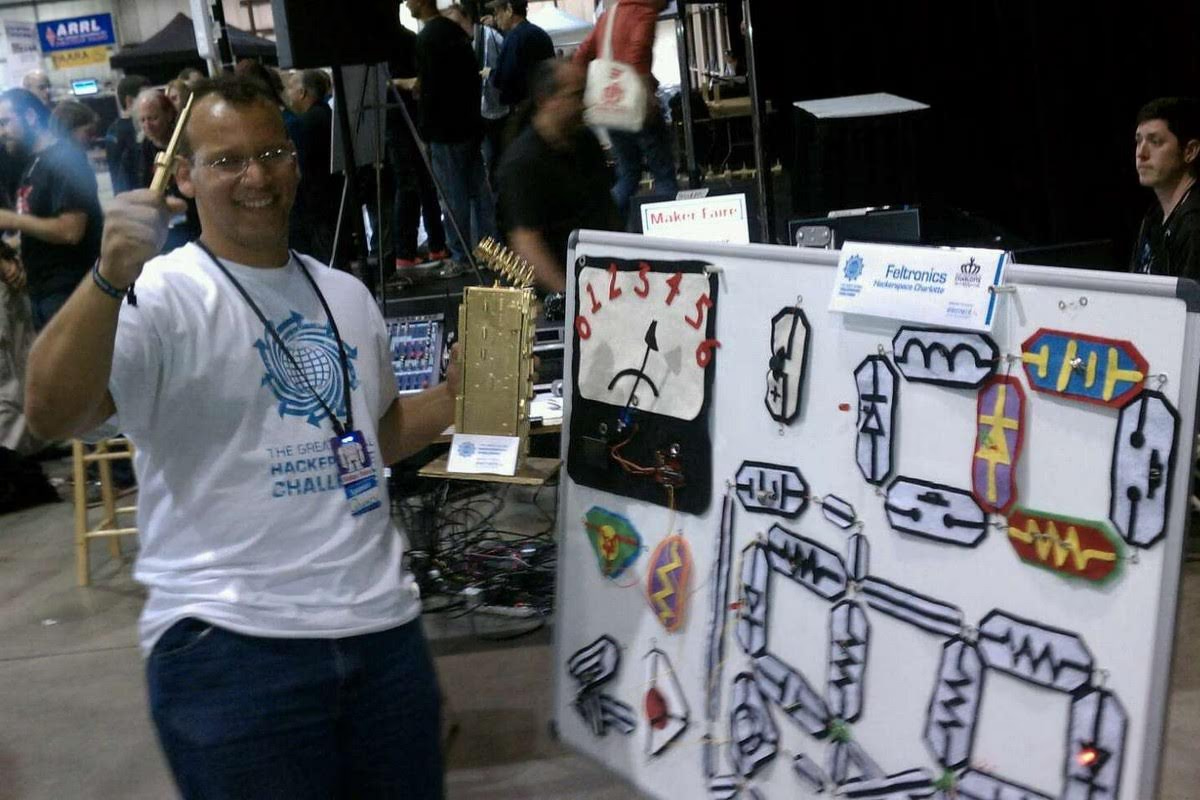
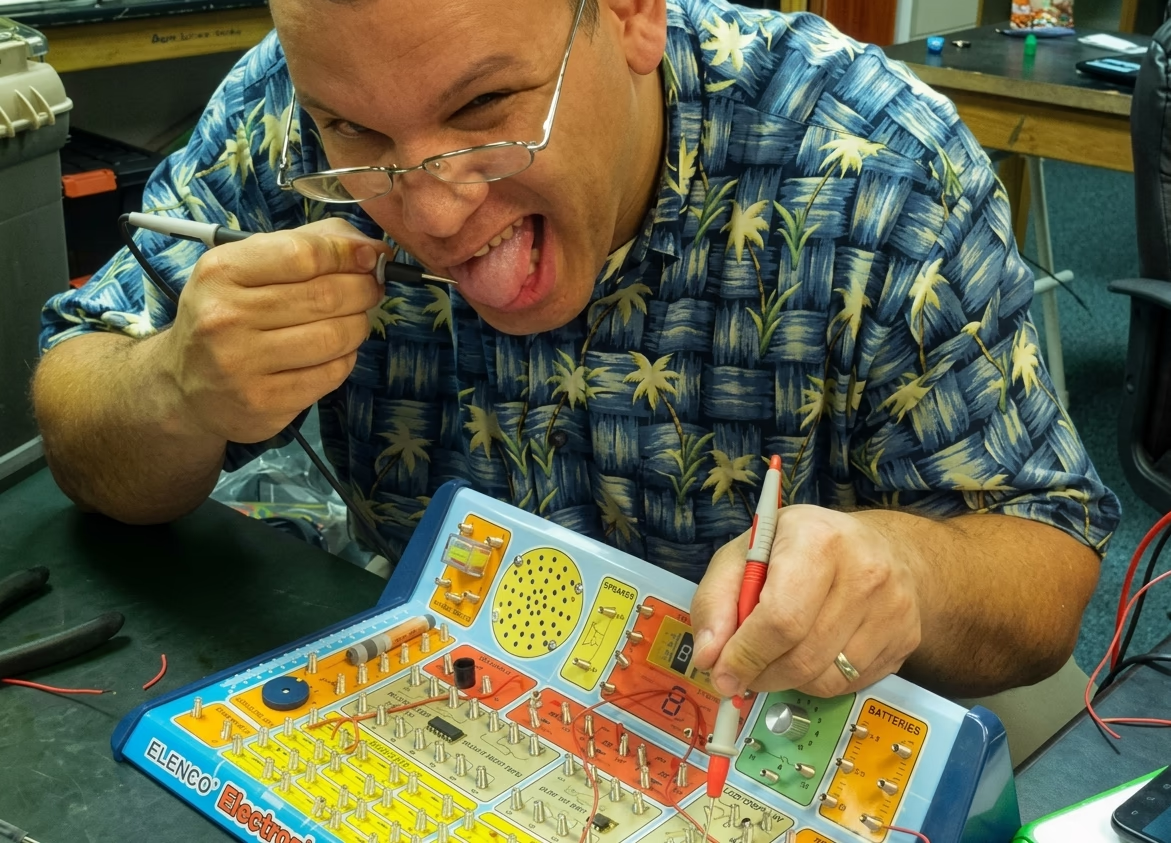
United States Marine turned maker, teacher, and lifelong tinkerer. Tesla coils (big ones and small ones), tiny swords forged with kids at the anvil, aluminum cast with lost foam, thousands of compressed air rockets launched - and once helped set a Guinness World Record for the world's largest QR code. If it sparks, flies, melts, or explodes, he's probably taught a kid how to do it safely.

Georgia Tech Industrial & Systems (Helluva!) Engineer turned software developer turned technology leader. Started her career in data analytics writing Java and SQL, training Chick-fil-A on object-oriented programming, and building automation for the travel industry. An engineer at heart - loves diving into the weeds to figure out how things actually work... and then make them better.
Cultivating curiosity, critical thinking, and creative confidence
Mobile STEM workshops that come to your school, daycare, library, or student group - bringing real tools, real materials, and real projects to kids across metro Atlanta.
Start with a puzzle. Let kids ask the first question.
Predict, test, measure, and iterate - the real engineering cycle.
Real tools, real projects, a safe space to fail forward.